How To Deseed A Watermelon For Safe Consumption: On the domestication of danger

2018, Gaza

Thousands gather, pressing against the border fence in what was called The Great March of Return. Across from them stand Israeli soldiers, framed by the alien architecture of metal and concrete. Rifles raised, they fire directly into the crowd. Men, women, and children struck down beneath the colors of red, black, white, and green stretched across wood. A simple piece of fabric becomes a target.

Soldiers with rifles; marchers with flags. One fires bullets, the other eclipses erasure by waving above the heads of empire. The Palestinian flag is lethal not for what it can do, but for what it declares: presence, permanence, and the insignificance of the occupier’s power in the face of a people’s pride.

Beyond Palestine, however, another image has taken hold among those estranged from the land. A watermelon split open, its red flesh and green rind echoing the flag. On tote bags, murals, and gallery merchandise, it circulates freely as shorthand for solidarity.

But how did a symbol that claims to empower the prohibited come to eclipse it? The answer lies not in the curated gallery walls or carefully written statements at public events, but in another watermelon, one carried by a mother in Haifa in the early 1970s.
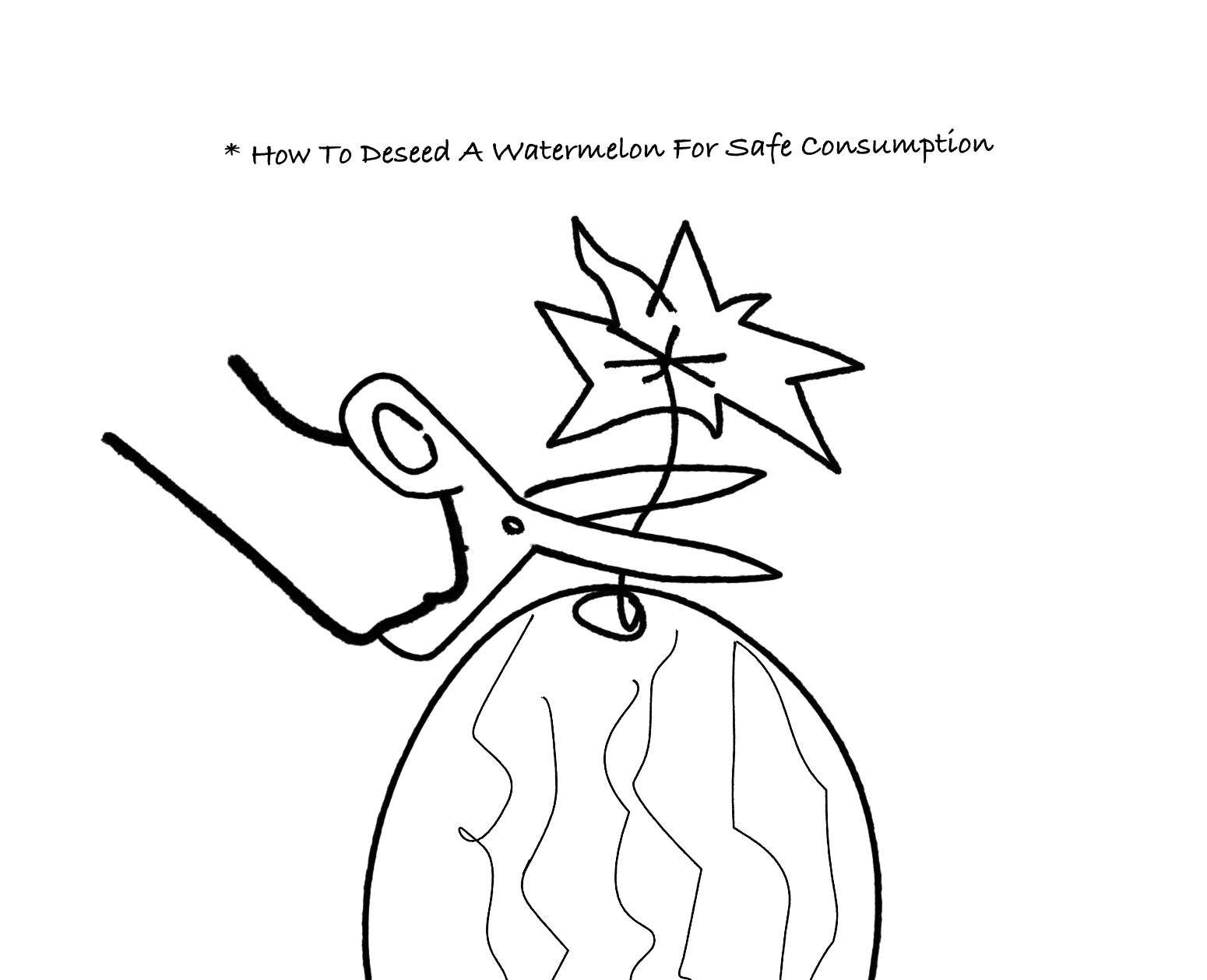
* How To Deseed A Watermelon For Safe Consumption — drawing

1972, Haifa

A Palestinian woman moves through the machinery of occupation. Her presence appears unremarkable: in one arm she steadies her infant son, in the other she carries a basket of fruit. A mother, slow, vulnerable. Her name was Zakia Shamut, known as “Umm Mas’oud,” and in her basket lay a hollowed watermelon. Poor in nutrition but heavy in substance, its flesh had been replaced with twenty kilograms of explosives.

The watermelon she carried that day was placed in the occupied city of Haifa, detonating in a Bulgarian circus and killing fifteen Israelis, wounding dozens more.

In that moment, the colonial logic of domination was undone. A mother and her fruit basket brought the very infrastructure of regulation into collapse. Not by force alone, but by confronting the gaze of empire and exploiting how it sees, and refuses to see, the Palestinian body.
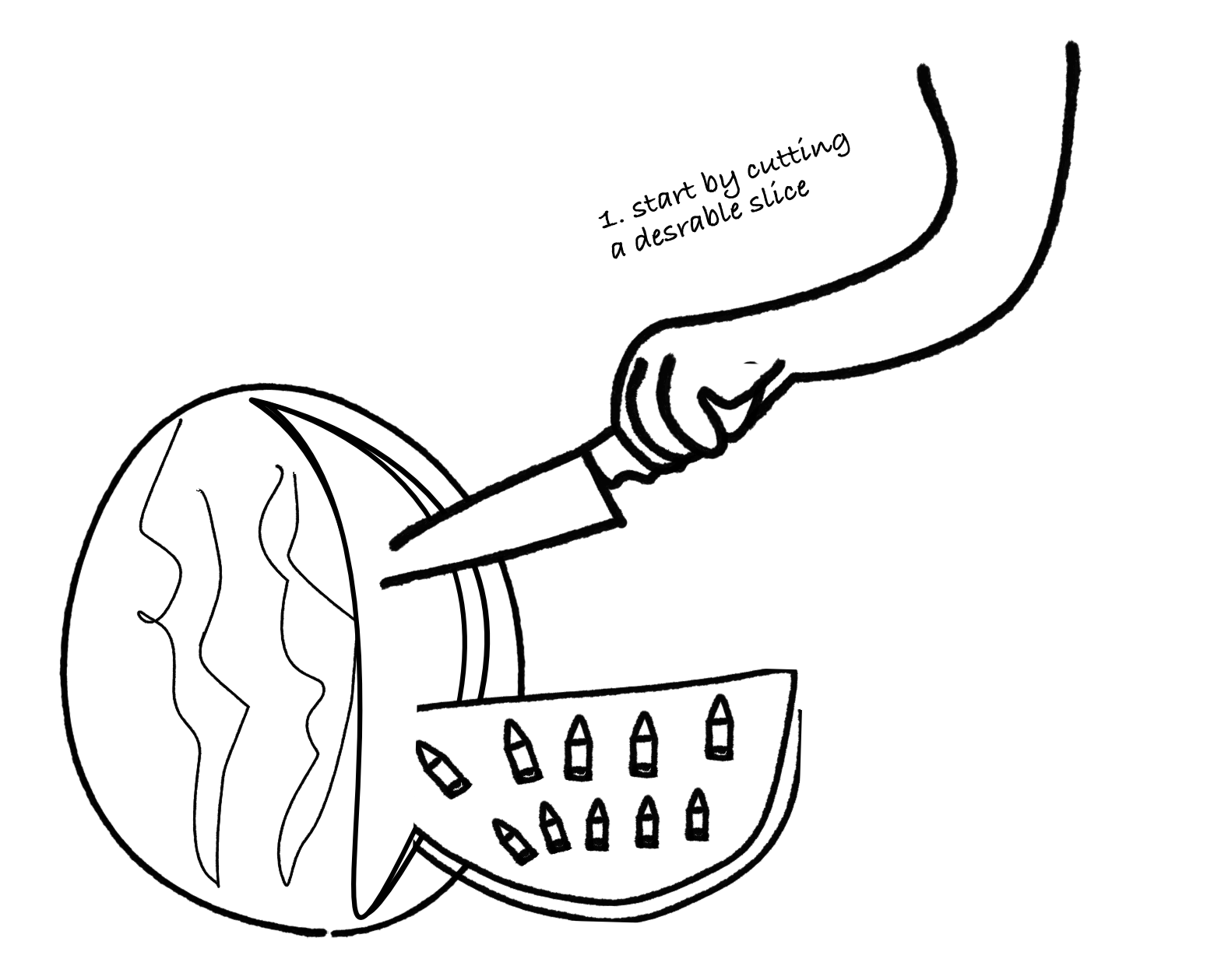
1. start by cutting a desirable slice

Within the fragile order of the settler colony and its obsession with preserving a façade of permanence, the native body must be rendered transparent and categorically contained within paranoid taxonomies that sustain the colony’s fabricated hierarchy. The colony must therefore multiply its eyes and extend its reach; its surveillance is not confined to official channels but diffused throughout the social fabric of its alien population. Embedded in the gaze of men, women, and children, each settler is a deputized agent of observation.

Under such an order, the Palestinian mother unfolds a paradox. Beyond the present, her body torments the colonial calculus of demographics; her fertility provokes existential alarm that haunts the settler’s projections of permanence. Yet in the immediate encounter, she is presumed harmless, her maternal role overriding suspicion, her nurturing urges classifying her as noncombatant.

By understanding this contradiction, Umm Masʿoud converts decades of routine scrutiny into tactical cover. Under the guise of a mother carrying an overbearingly heavy summer fruit, she penetrates the colony’s surveillance, generating an innocent opacity the empire’s logic fails to penetrate.
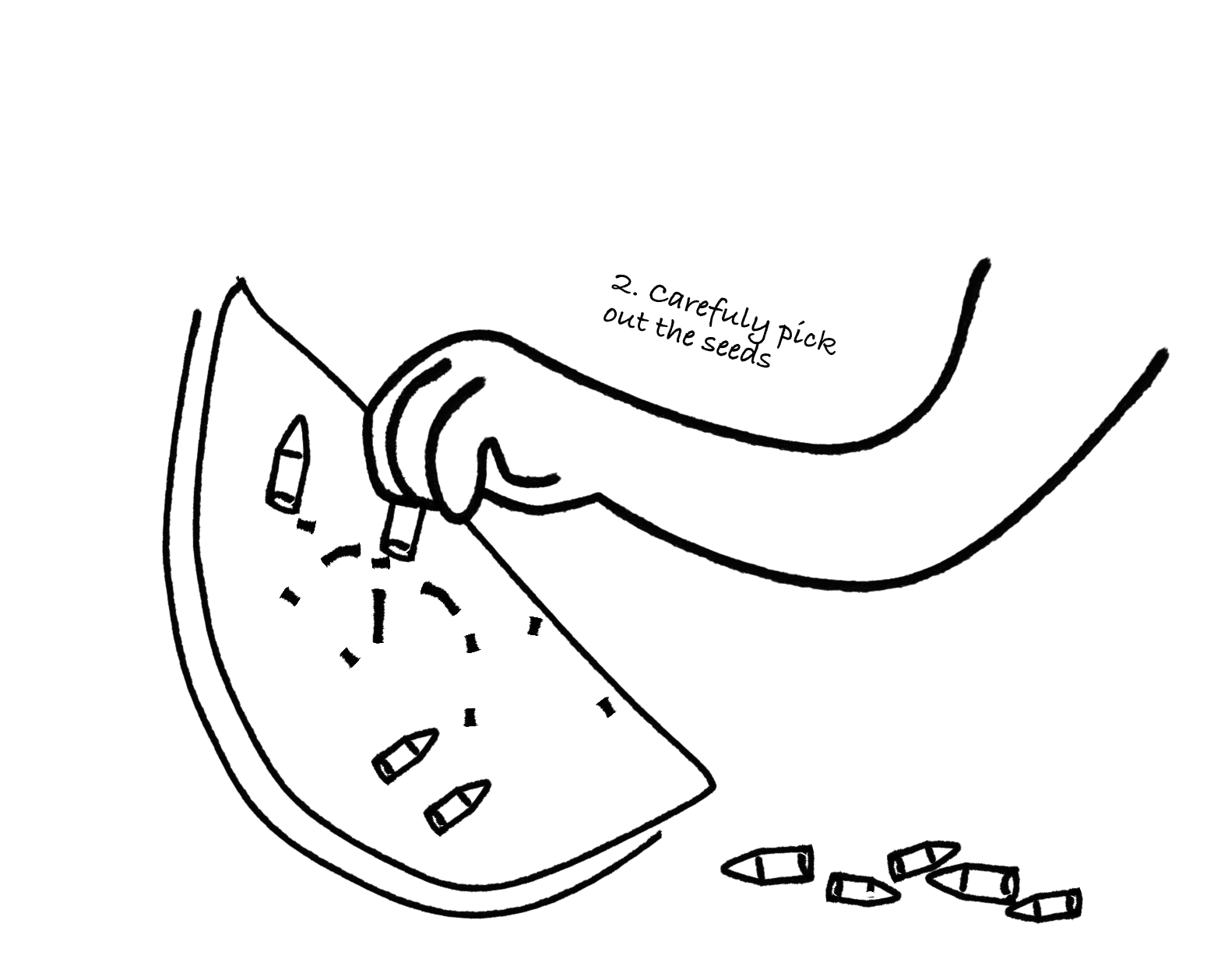
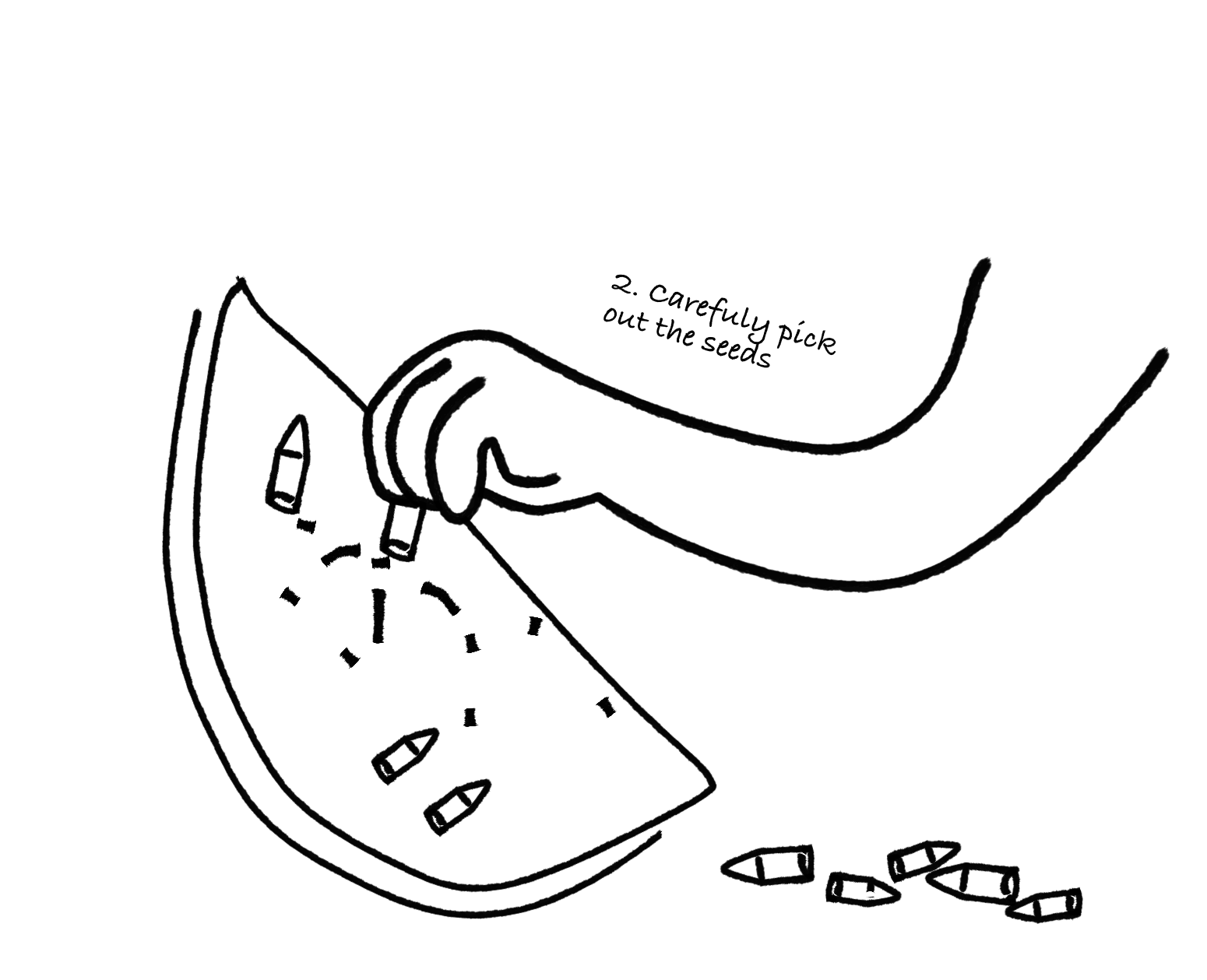
2. Carefuly pick out the seeds

But Zakia’s watermelon was never neutral. She didn’t carry it to disguise her way into safety but to pierce and rupture. Its danger lay in its ephemerality past its objective, refusing to overshadow its purpose of turning the occupier’s violence against itself, by weaponising invisibility, and making survival itself ungovernable.

In stark contrast to the watermelon that circulates today, while its use may have been argued to serve a purpose under clear and specific circumstances, its usefulness can easily be deemed detrimental to its cause if such circumstances are not present, turning the conveniently coloured fruit into exactly that: convenience that never endangers its carrier.
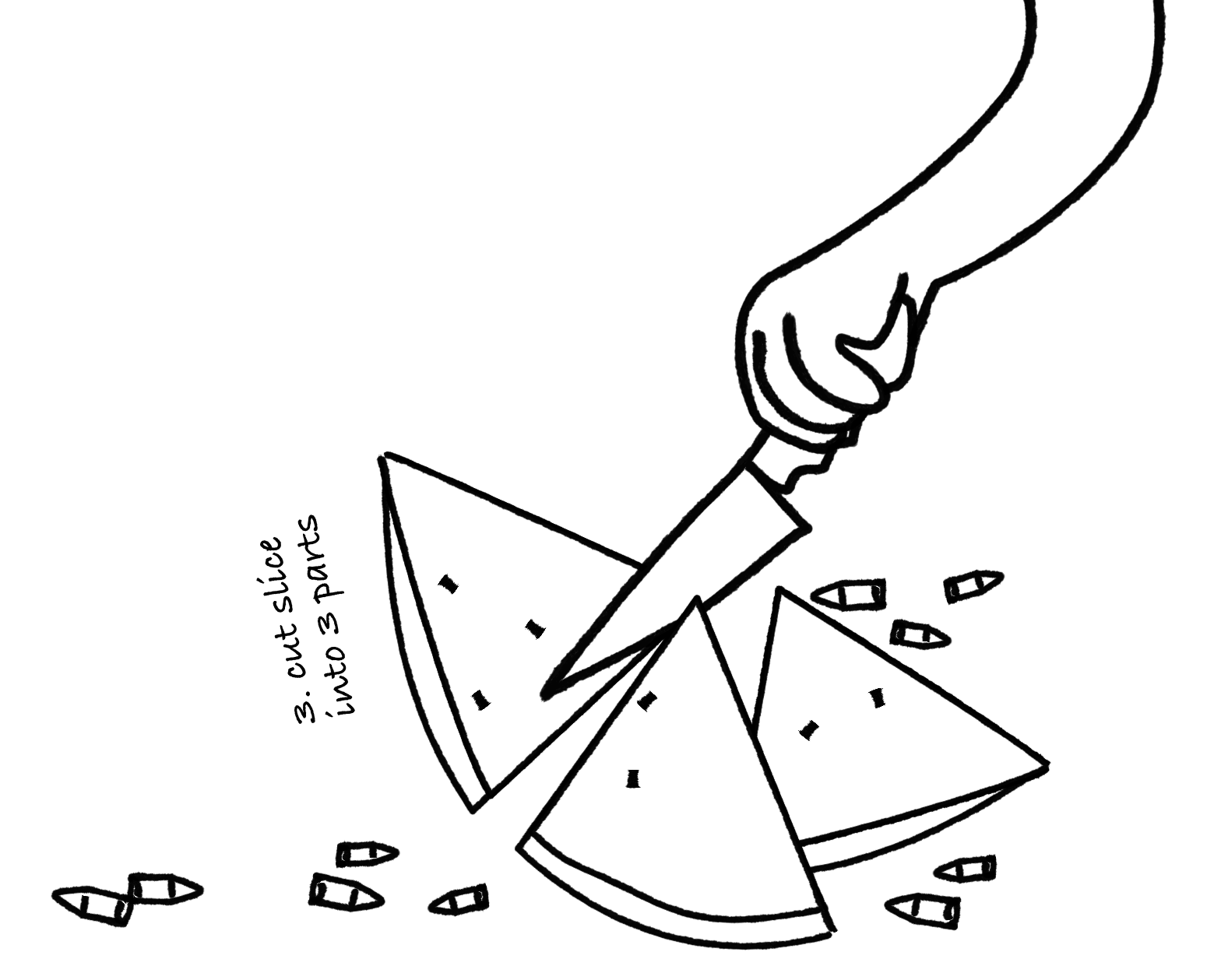
3. cut slice into 3 parts

The bourgeois order tolerates, even embraces, symbols that leave its machinery intact. Worn on tote bags and distributed on event brochures, the symbol of the watermelon is turned into a harmless emblem of identity. Its safety is precisely its condition of possibility. It punctures nothing; it risks nothing. It thrives because it can be consumed, replicated, and displayed without consequence.

A lazy and cowardly infantilization of the Palestinian struggle sold as radical ingenuity, designed to satisfy performative dissent yet survive within empire’s optics.

But to resist erasure is not to invent new ways of existing safely within empire’s prohibitions; it is to confront the machinery that enforces it, its bans, its surveillance, its carceral architectures. When the Palestinian flag draws bullets in Gaza and arrests in Jerusalem, replacing it with another symbol in other parts of the world does not preserve solidarity; it concedes to domination and renders it palatable for liberal frameworks that refuse the story of Zakia: that a Palestinian can be a fighter as well as a victim.
4. seperate the rend from the flesh

Born in Haifa in 1945, Zakia Shamut was one of the first Palestinian women in the ’48 territories to join the armed resistance. By the early 1970s she had carried out seven operations against settlers and soldiers alike. For years she eluded capture, only later arrested mid-pregnancy along with her family and sentenced by an Israeli military court to 1,188 years in prison.

Zakia’s story exposes the violence of symbolism. It confronts the boundaries between symbol and substance, between décor and intervention. It rejects the safe theatre of resistance that never punctures colonial control. It reminds us that symbols retain their force only when they rupture empire’s machinery, not when they circulate safely within it.

Her watermelon teaches us that militant improvisation must remain undomesticated. Resistance can only become heritage if it achieves its goal of complete liberation; otherwise, its embrace is simply domestication into institutional order.
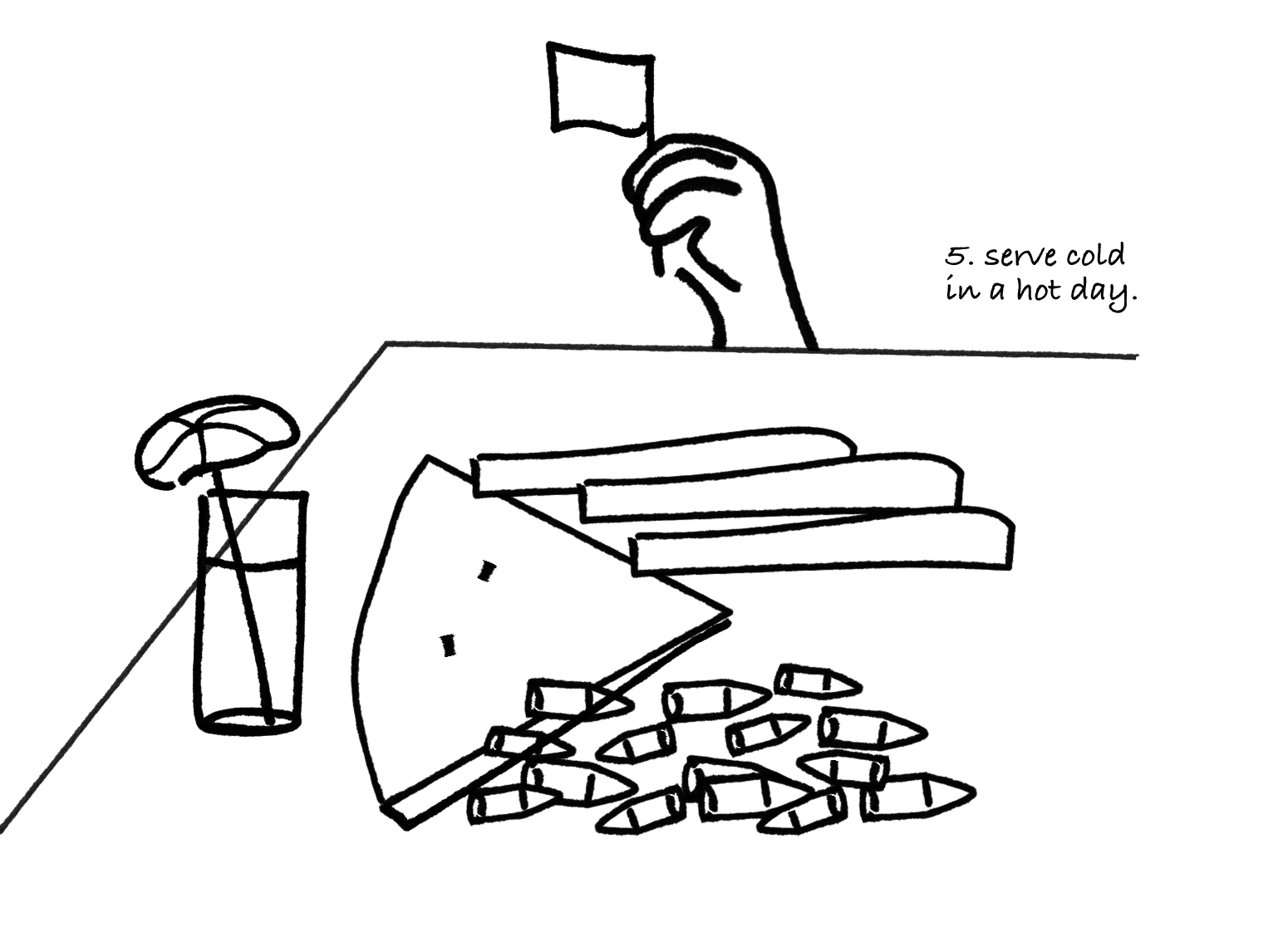
5. serve cold in a hot day.

Handala And The Freeze Point: How To Disable A Militant Icon

A small boy with his back turned, hands clasped behind him, barefoot and ragged, an eternal witness, helpless in front of injustice. For many, this is Handala: a ten-year-old symbol of tragedy, frozen in silence.

But Handala was never meant to be a mute bystander. Born in the press, he was improvised into militancy using daily papers in Kuwait, Beirut, and London, he infiltrated living rooms, cafes, buses, and workplaces, finding his way into camp walls, school notebooks, banners, and graffiti. He circulated without permission, disappearing from editorial oversight and institutional supervision.

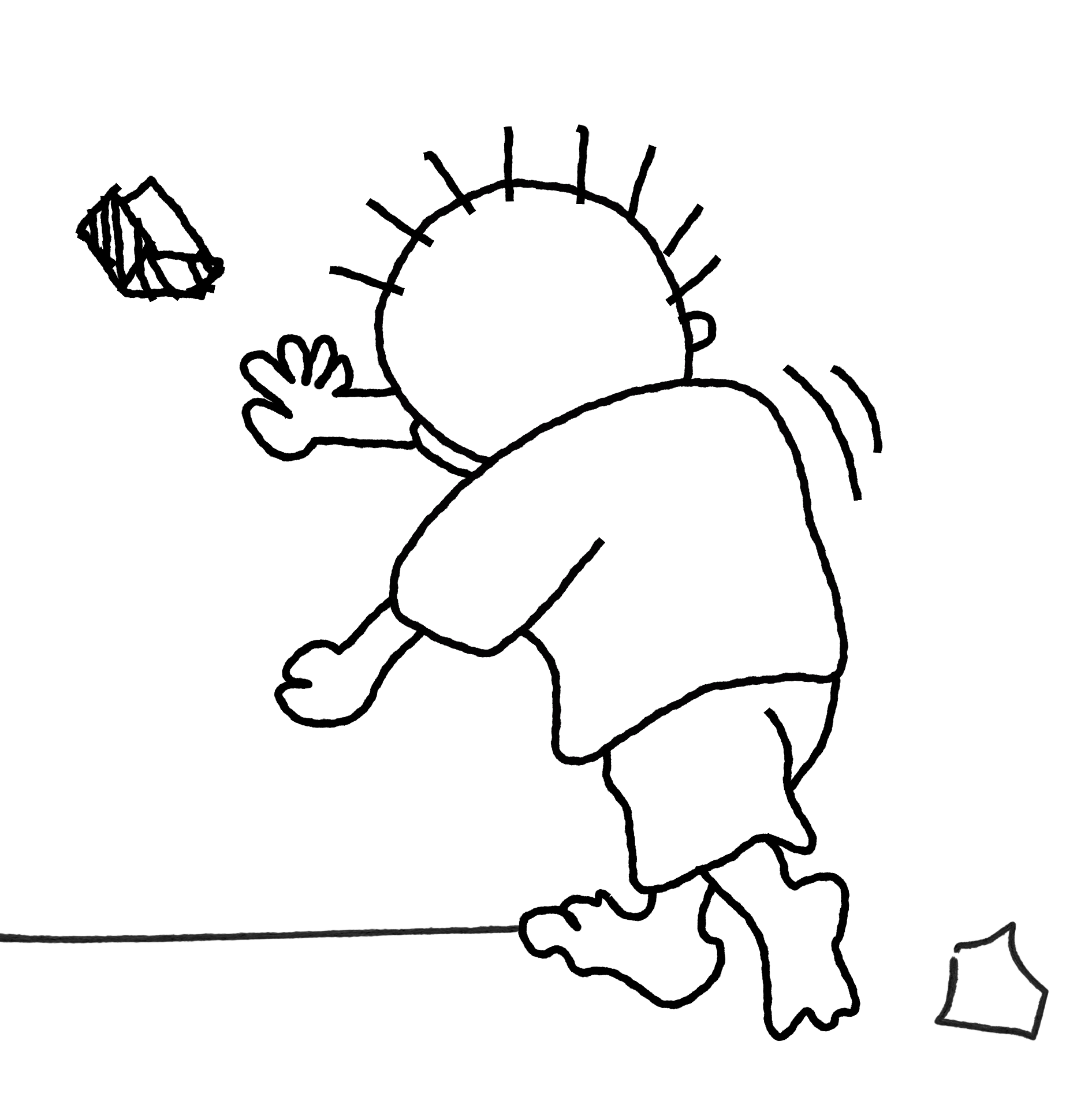
Far from passive, Handala was meant to intervene. He threw stones, planted flags, and shook his fist, actively participating in the struggle.

Handala throwing a stone

I drew him as a child who is not beautiful; his hair is like the hair of a hedgehog who uses his thorns as a weapon. Handala is not a fat, happy, relaxed or pampered child. He is barefooted like the refugee camp children, and he is an icon that protects me from making mistakes. – Naji al-Ali

That mobility, shifting from action to observation depending on what the scene demanded, is what placed Handala firmly inside the logic of militant improvisation. From protests to despair, resistance to ridicule, his image shifted as swiftly as the crisis. His flexibility made him effective, his outline, instantly recognisable, reproduced endlessly on walls, banners, T-shirts, and solidarity posters across the world, in fact he was so averted to monumentalisation that he refused even provincial framing:

He was the arrow of the compass, pointing steadily towards Palestine. Not just Palestine in geographical terms, but Palestine in its humanitarian sense, the symbol of a just cause, whether it is located in Egypt, Vietnam or South Africa. – Naji al-Ali

But then came what I define as the Freeze Point, the moment a tactic ossifies into a canonical icon. It is the cultural equivalent of guerrilla theory’s warning: once a mobile unit builds a fortress, it gains stability and loses mobility, becoming easier to neutralise.

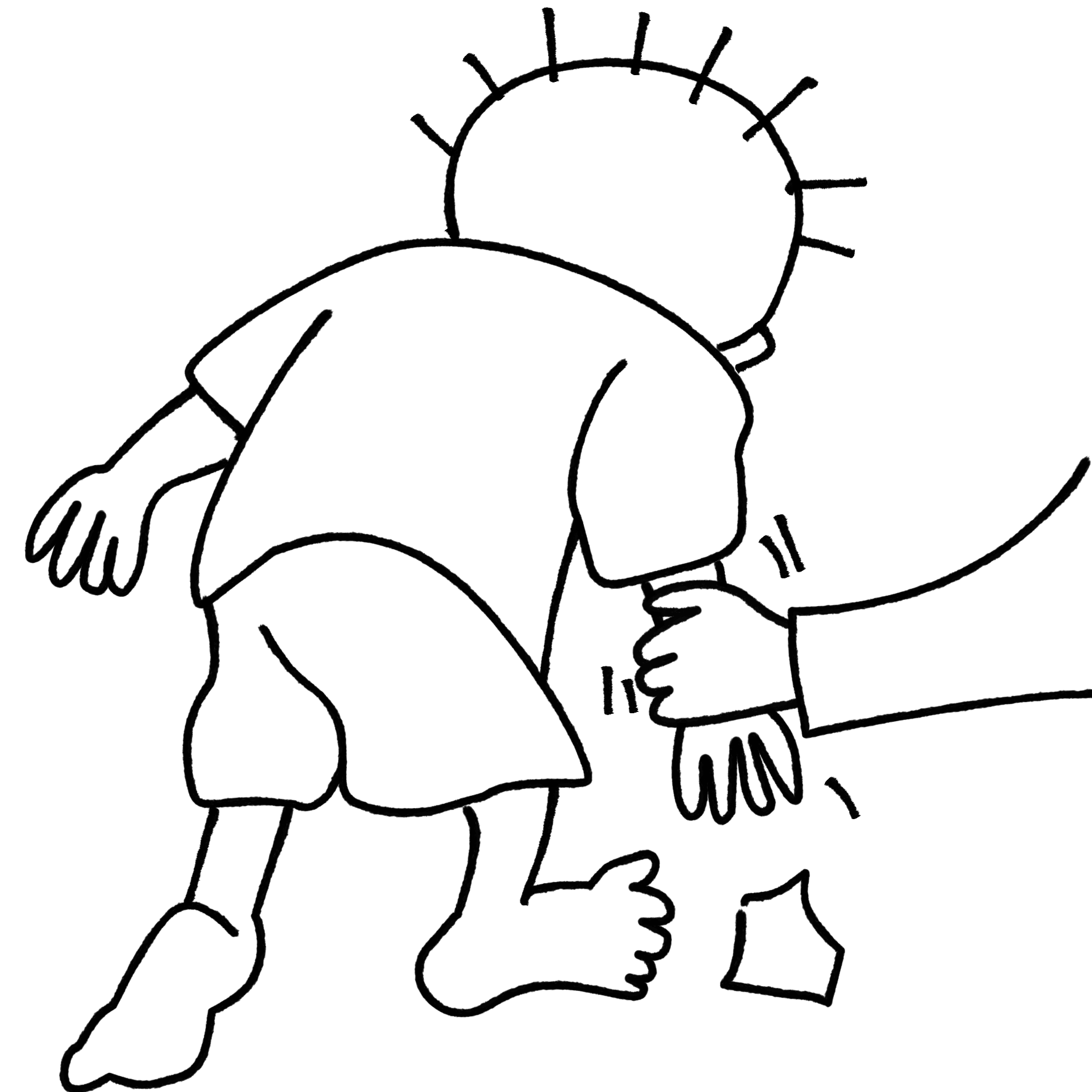
Handala seized by a hand

By the late 1980s, Handala froze. After Naji al-Ali’s assassination in 1987, his icon was sanctified. The First Intifada had just erupted, and in the absence of his creator, Handala was quickly adopted as a rallying emblem. He appeared on banners, leaflets, graffiti walls, and protest placards, omnipresent, but no longer adaptive. The figure was untouchable, beyond revision. What had been a living tactic became a sacred image.

NGOs, solidarity networks, and cultural institutions soon embraced this frozen Handala. His outline was reproduced on museum walls, solidarity stamps, and heritage merchandise. He was made safe for circulation within official spaces, transformed from a guerrilla courier into a commemorative logo. The boy who once threw stones or planted flags was now confined to a single, silent posture.

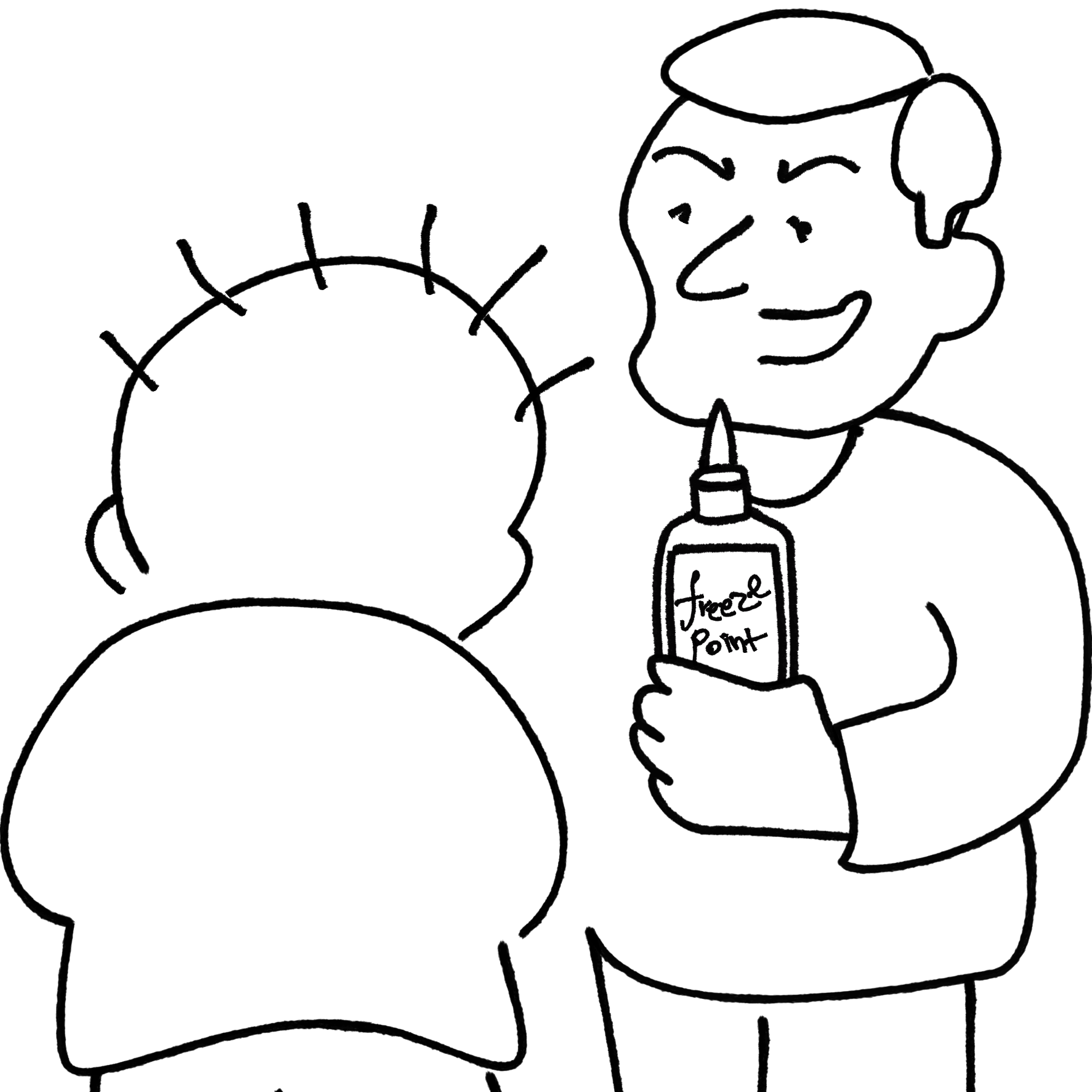
A man holding Freeze Point glue behind Handala

Circulation persisted, but adaptation was over. The figure no longer responded to massacres, strikes, or betrayals in real time. He no longer bent to the shifting crises of his people. Instead, he symbolised Palestine in the abstract, a banner of identity, detached from the tactical urgency of the struggle on the ground.

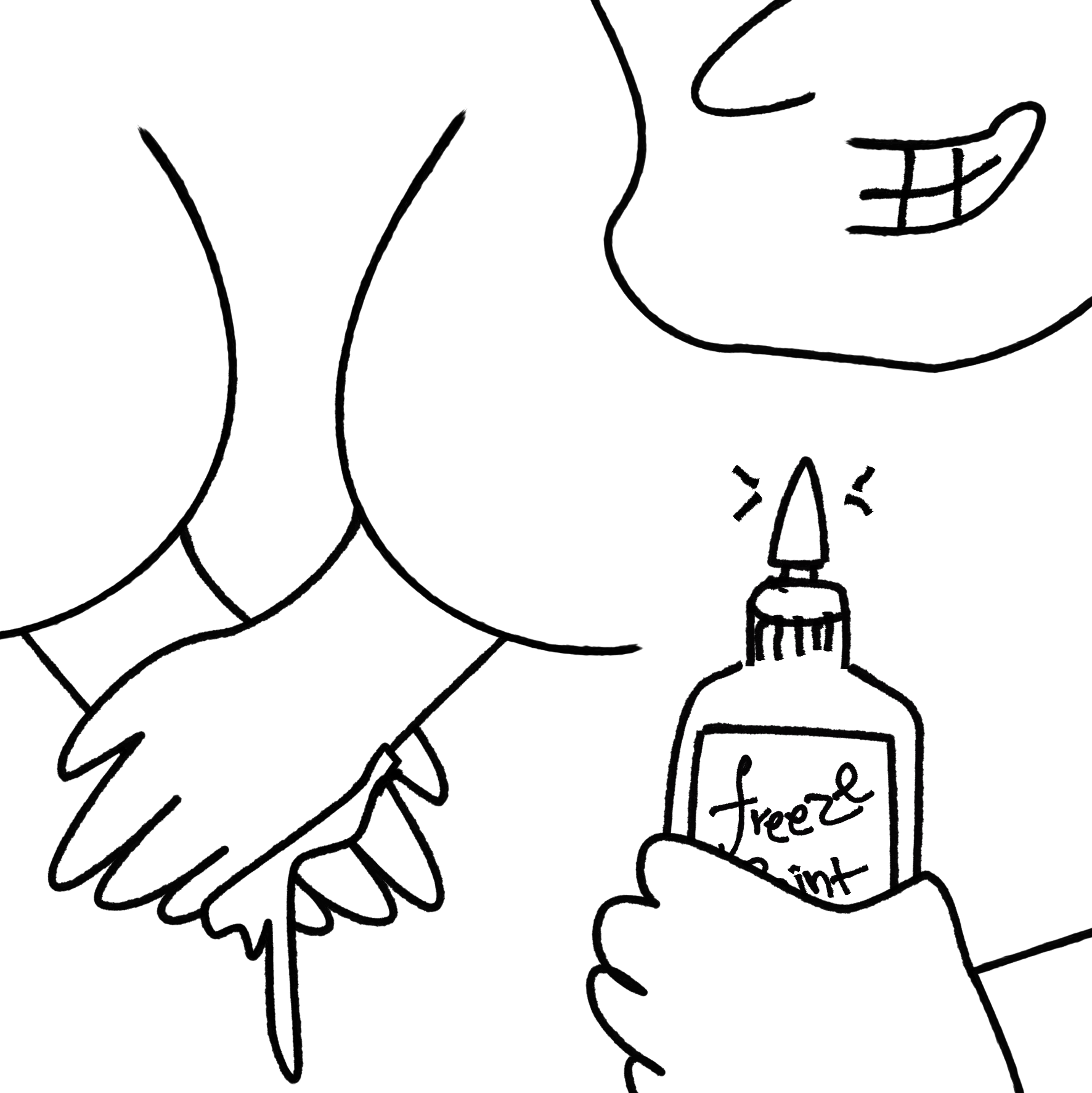
Freeze Point glue fixing Handala’s hands

Preservation masquerading as honour, repetition mistaken for survival. Revolutionary art must resist reverence and be prepared to vanish before it can be frozen in a static monument. Handala’s Freeze Point shows how insurgent icons are neutralised not by being banned, but by being revered above their objective.

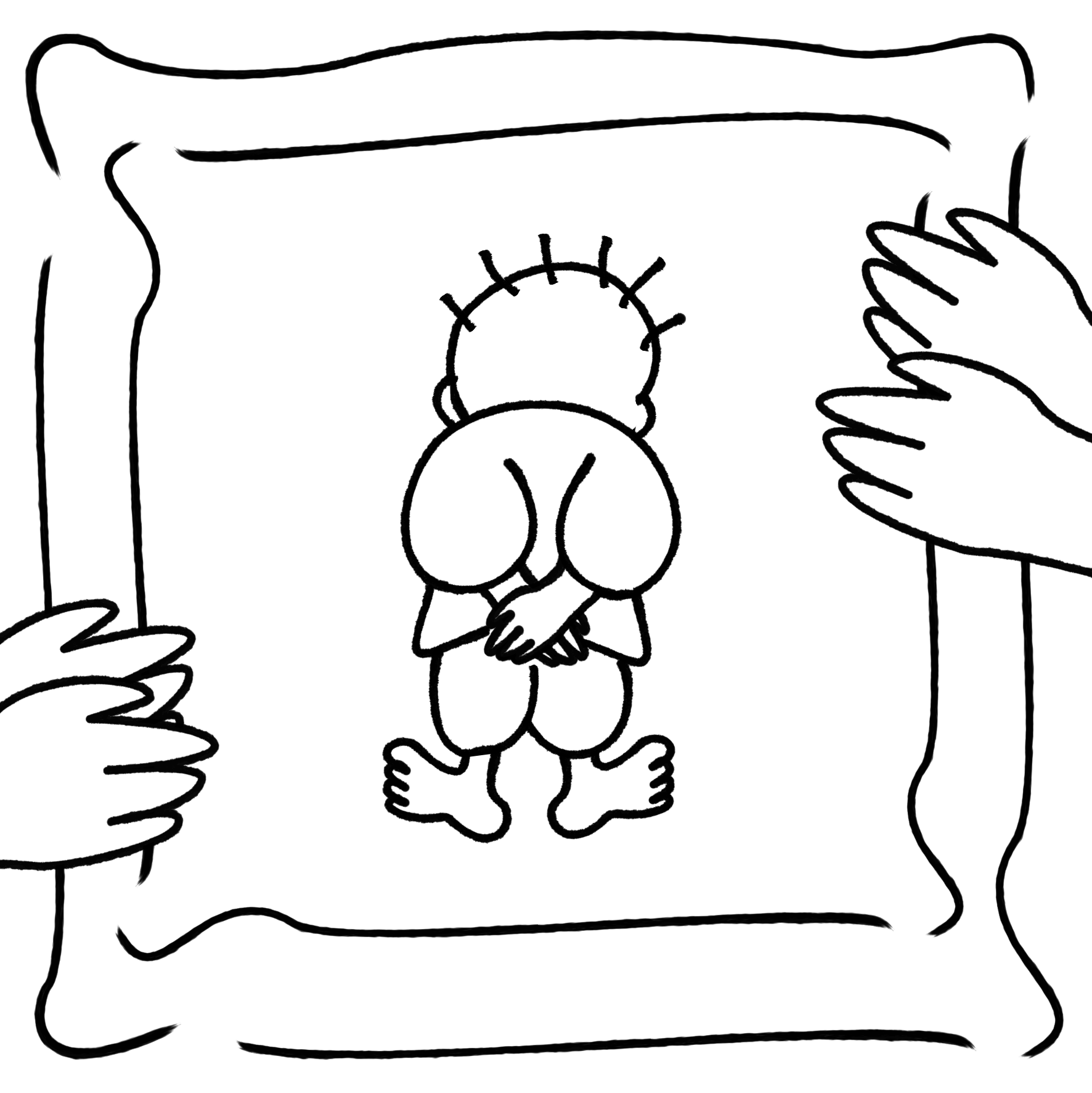
Handala in a frame held by hands
When Handala exposes the plots and conspiracy of the enemies of the people, his role is positive. – Naji al-Ali

Militant Improvisation: Urgency and Refusal In the Militant Cultural Front

In moments of profound crisis, the limitations of form become impossible to ignore. The act of depiction collapses under the weight of necessity, and the canonical tools used to represent suffering, injustice, or resistance within cultural production reveal their theatrical inadequacy in the face of material urgency.

Creative language, as inherited through dominant institutions, is already disarmed. It has been neutralized through repetition, commodified through circulation, and contained through institutional framing. Even the most violent realities are metabolised into spectacle where suffering becomes content and resistance is theme.

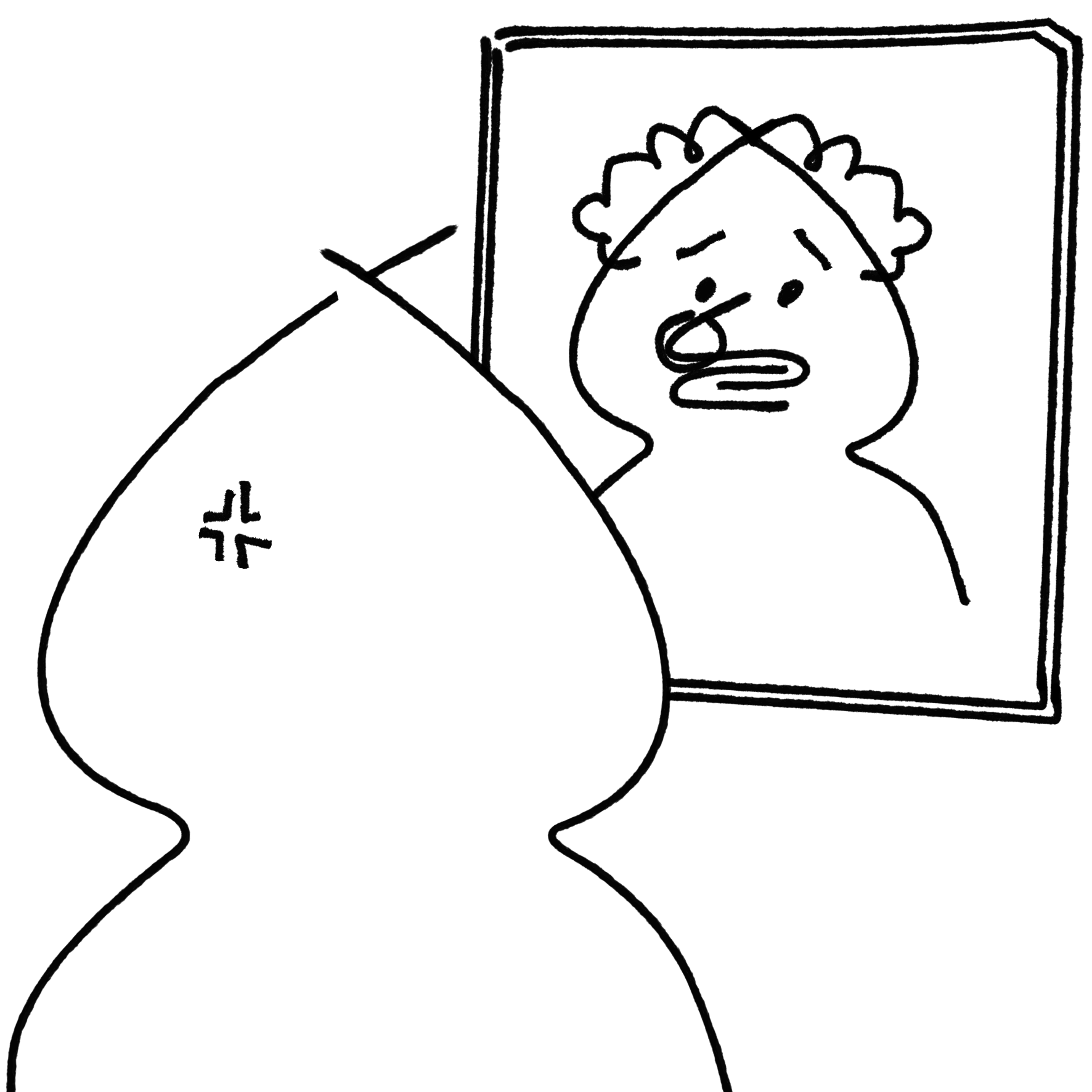
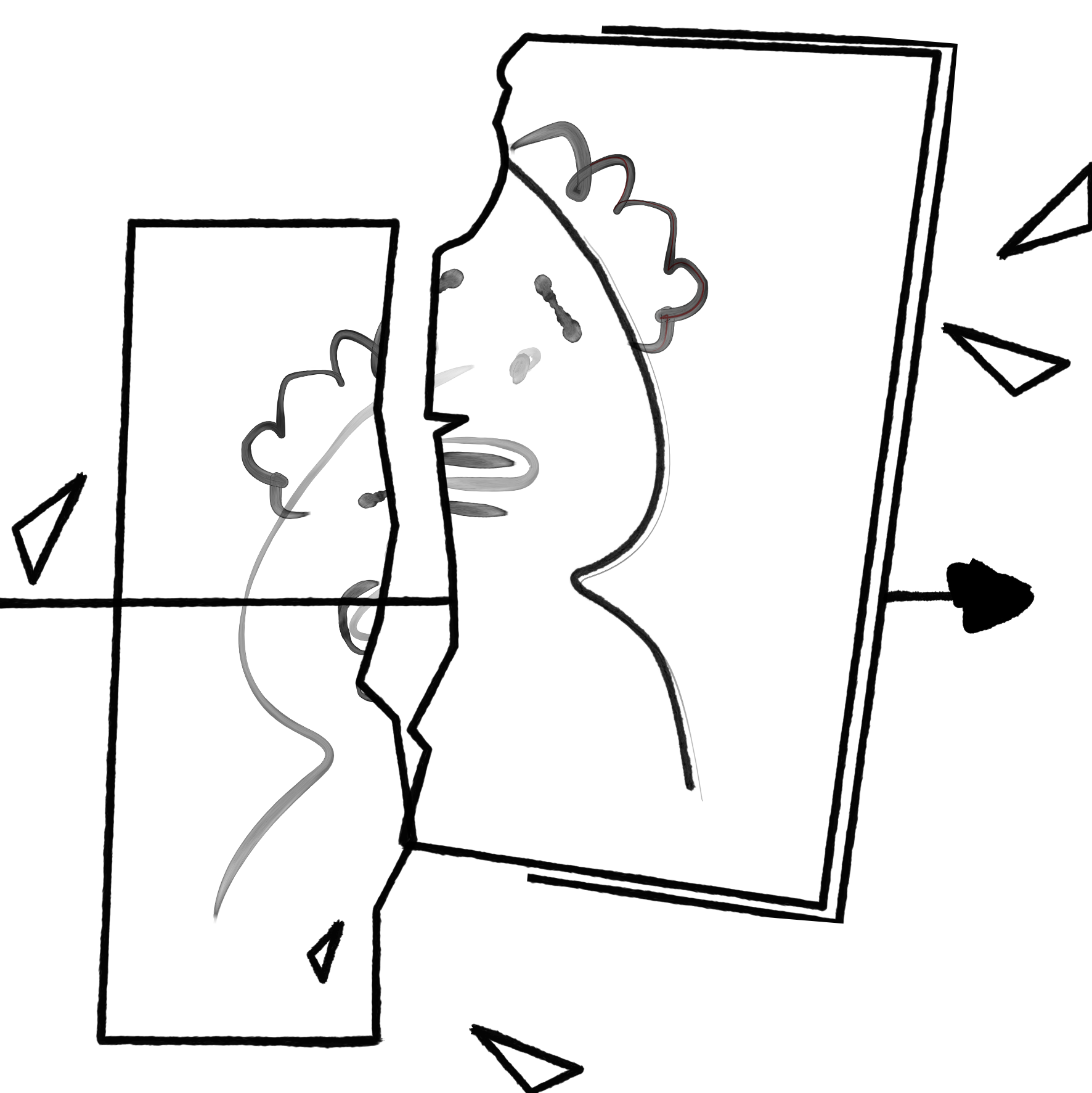
A figure facing a framed portrait

Art, when assimilated into this cycle, becomes soft décor for hard power, a symbolic currency within elite cultural economies, where it is asked to heal, to reconcile, to soothe. But what if healing, within this dynamic, is itself a trap? What if the invitation to “process” trauma is merely a detour, a return to a world that must be refused?

Militant improvisation emerges precisely at this point of refusal, through which it performs an entirely different function. It is tactically operational before it is metaphorical or symbolic, driven first and foremost by urgency: the urgency of the moment (the temporal) and the urgency of clarity (the contextual).

1. Temporal

Art produced within institutional frameworks often fetishizes immortality and manufactures relevance. It is nurtured by the luxury of time, slow reflection, delayed interpretation. It validates itself through processes of curation, contextualization, and critical analysis. It waits for reviews, and participates in cycles of exhibition and critique. By the time it arrives, the world it responds to no longer exists.

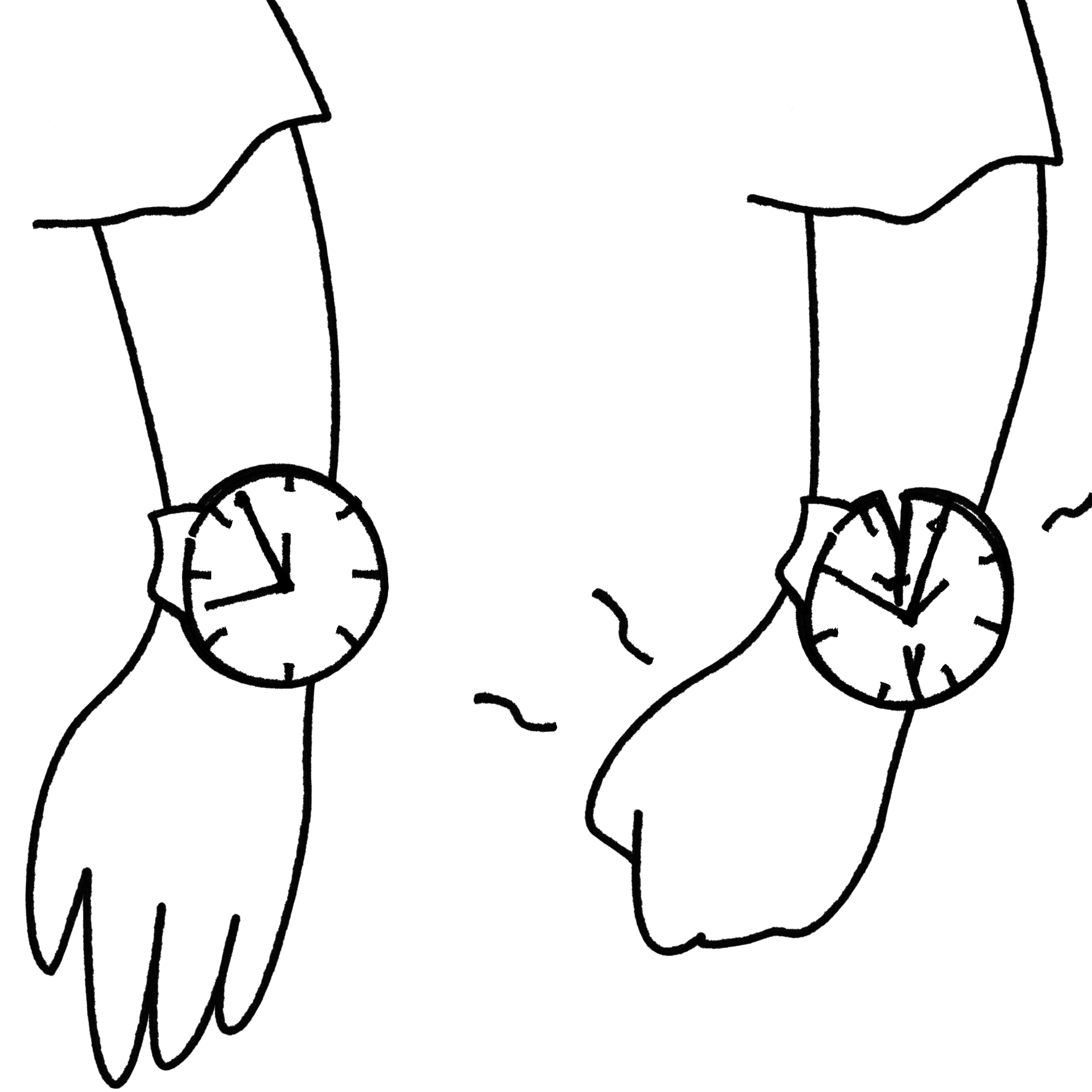
Two wrists wearing watches

Improvisation becomes a necessity when the structures meant to preserve life are the same ones dismantling it.

Militant improvisation refuses delay. It is born into emergency, through the very womb of crisis. It understands that its urgency renders it ephemeral, sometimes by choice, but more often by force. In response, it improvises itself for immediate impact, with no formal attachments. It is not crafted for permanence, nor intended for the archive.

2. Contextual

Militant improvisation does not require philosophical intricacy or theoretical complexity. It is not formulated to be seen only through squinting eyes, It is vivid and instantly legible, rejecting interpretive buffers and conceptual padding. It speaks to those already in motion, those without the luxury of a still moment to fill up with silence. If it cannot be understood immediately, it has already failed to act.

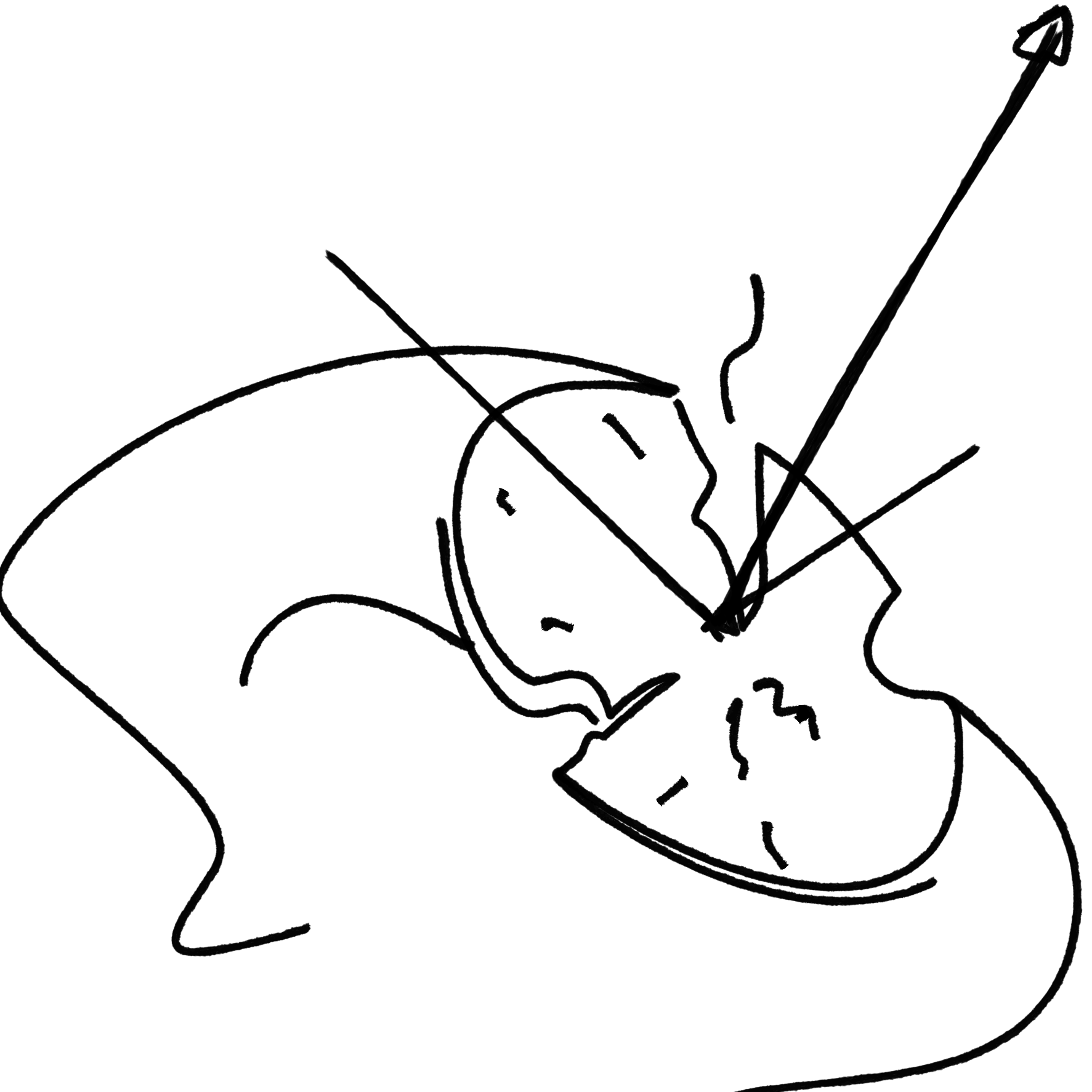
An arrow through a watermelon

In fact, one might not always recognize the categorical form of the improvised on sight, as it is not meant to be measured by institutional metrics. Militant improvisation may appear alien to the linguistics of art discourse, not because it is too abstract, but because it rejects the frameworks that render art palatable and profitable. It manifests as gestures that resist authorship, unconcerned with legacy or polish.

Crucially, militant improvisation must not be confused with “Radical Art” as defined by galleries or academic discourse. It is not a provocateur in form yet conformist in function. It is not about illustrating slogans or echoing movements from a safe distance. It is grounded in non-metaphorical violence, not in shocking the spectator, but in sustaining revolutionary continuity.

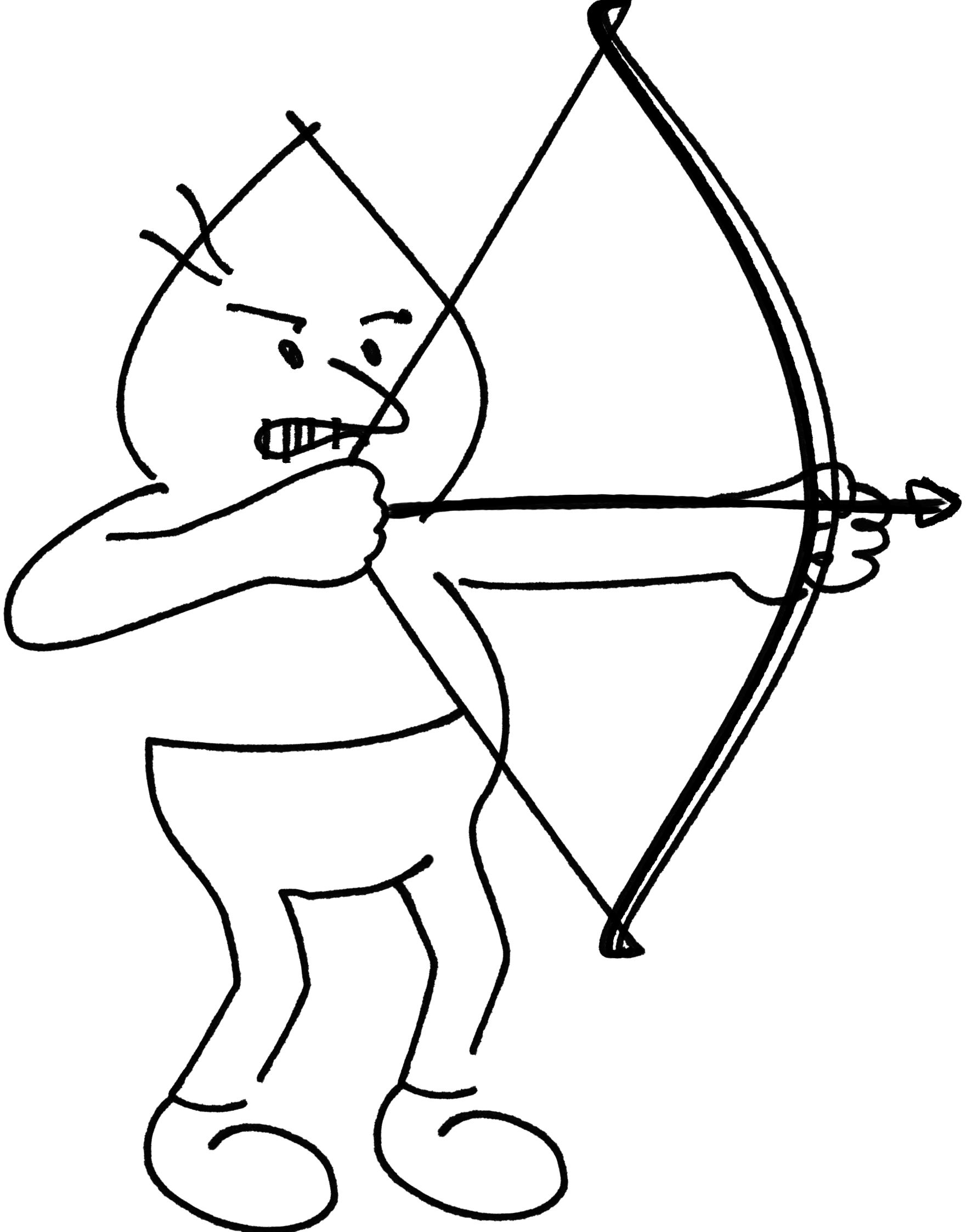
A figure drawing a bow

Militant improvisation cannot be disciplined into institutional logic, where visibility is often weaponised and “militancy” becomes a strategy performed within the sanctioned violence of art spaces.

Likewise, militant improvisation does not refer to “militant aesthetics,” because insurgency has no aesthetic, and crisis follows no formal logic. It is not defined by style, and its aesthetics are not a choice. It is not “art activism” in the liberal tradition, nor a strategic disruption of bourgeois spaces for symbolic effect. Instead it is carved in struggle and indistinguishable from survival.

Two framed faces pierced by an arrow

Improvisation allows movement in shadows, avoiding the traps of co-optation and spectacle. By refusing to ask for entry, it appears uninvited, knowing that inclusion is not solidarity, but the final act of neutralisation.

***

Though militant improvisation rejects the conventions of art as an institution, it enters this discourse not because it desires to belong, but because it is continually pursued and appropriated by it. Its methods, born of urgency and refusal, are inherently creative acts of insurgent making.

What forces it into overlap with the artistic paradigm is not a shared ethos, but the historical tendency of bourgeois artists and academics to hijack revolutionary gestures, extracting form while discarding function.

Thus, militant improvisation appears here not as art, but as a contested zone where art’s complicity, appropriation, and limits are exposed.

The Bourgeoi’rtist

Art by the bourgeoi’rtist often becomes a reflection of insecurity, trapped between bourgeois aspiration and proletarian anxiety.

The bourgeoi’rtist seeks legitimacy, clinging to aestheticism, abstraction, and identity performance as a means of escaping class contradiction. Their art, though sometimes cloaked in the language of liberation, rarely disrupts power structures; it performs dissent without material consequence.

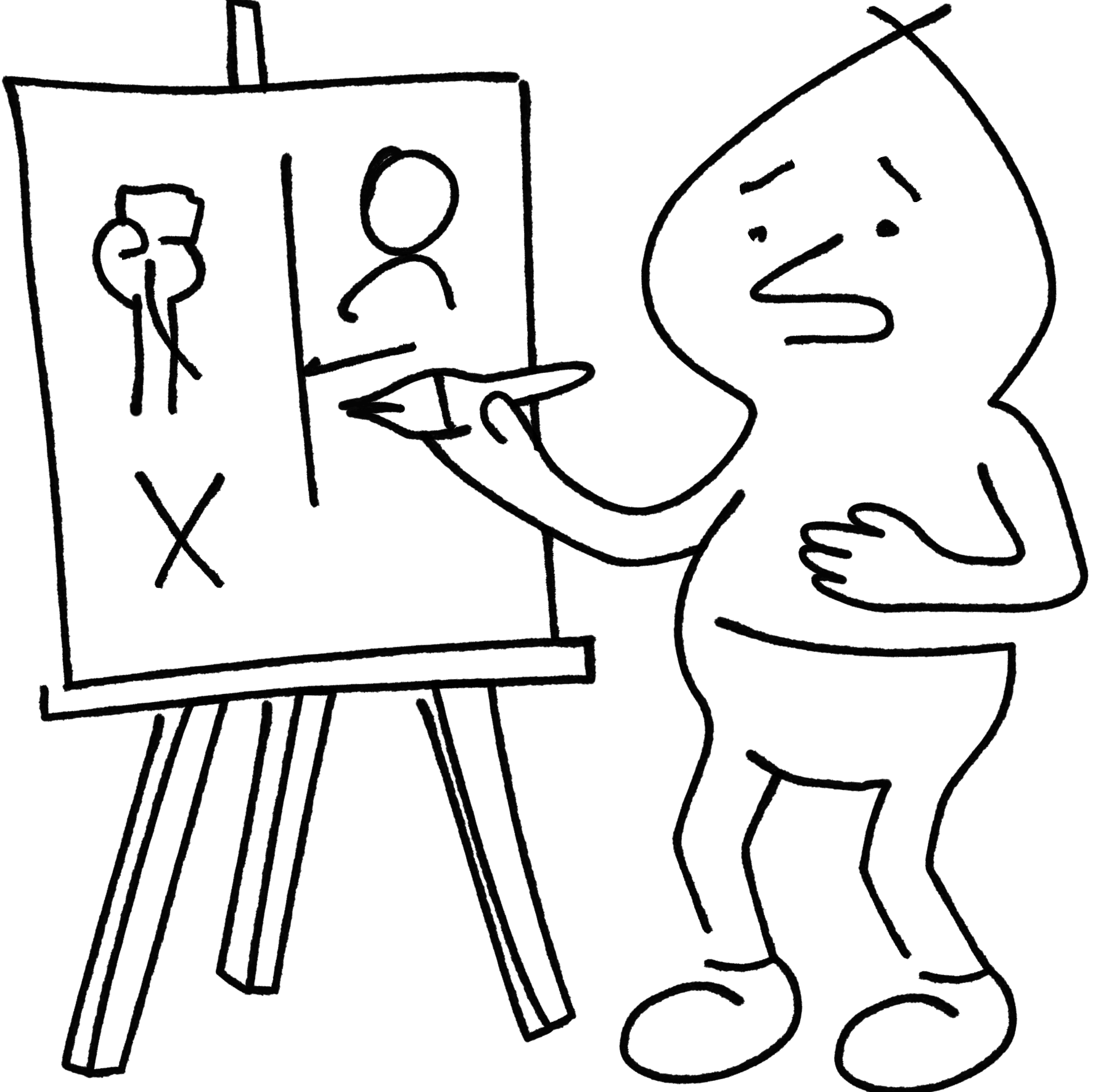
The bourgeoi’rtist at an easel

The bourgeoi’rtist mistakes visibility for revolution; they fear irrelevance more than repression. Their art, a frail indulgence, teeters on a tightrope between conformity and shock, self-pity and self-glorification.

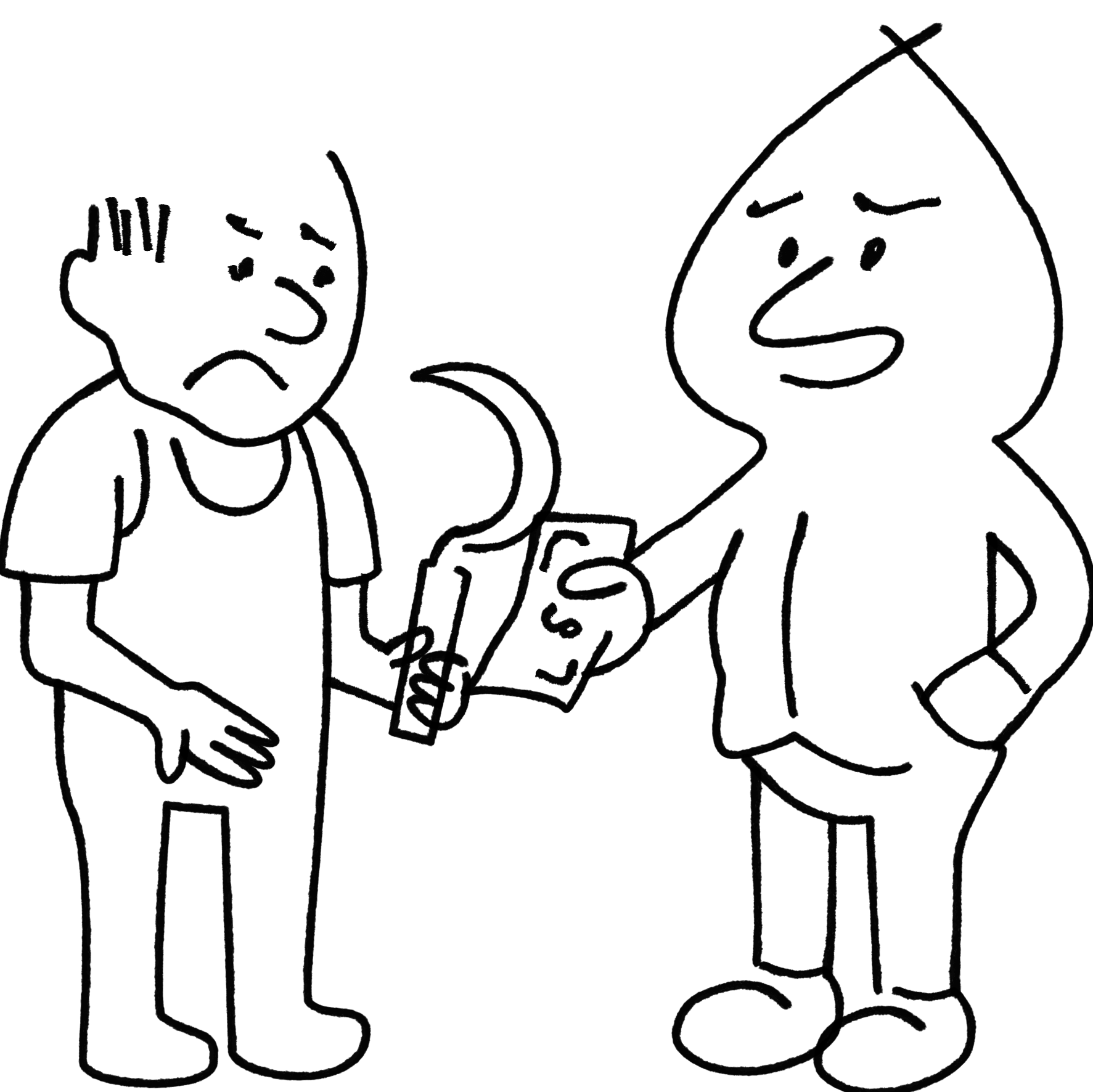
Trading a sickle for money

Rather than challenge the oppressor, they commodify the oppressed. They produce “radical” art for elite institutions, galleries, and biennales, reducing resistance to style.

Their revolution is aestheticized, sanitized, and sold, romanticizing the margins while maintaining proximity to cultural capital. Their only “risk” lies in provocation, not confrontation.

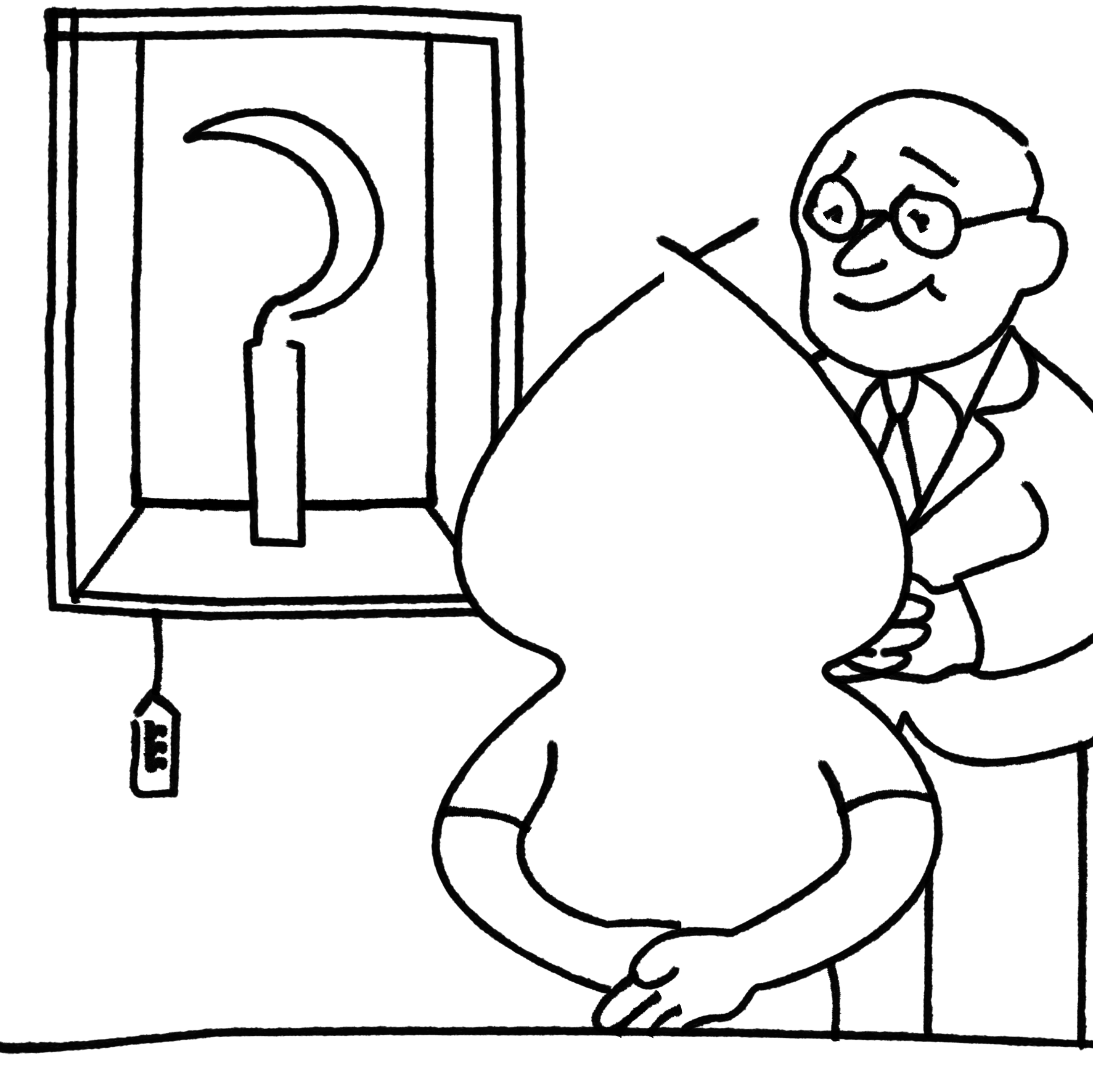
A framed sickle sold to a collector

The bourgeoi’rtist makes art about struggle, never within it. Their politics are gestures, their canvas a mirror of personal angst rather than a blueprint of collective strategy.

The bourgeoi’rtist eating a gold bar

But true change cannot emerge from those dependent on neutrality. Revolution can only be true when it’s based in the material reality of the struggle. Art must be a product of revolution; revolution must not be a product for art.

Art In Times Of Crisis: The Culture Of Suffering.

In capitalist societies, most art is commodified, produced not for its cultural value but for its ability to generate profit. This commodification leads to an abundance of artistic production that is devoid of significant meaning or intention beyond its market value. Thus, reducing production costs becomes a priority, yet paradoxically, its relatability must be increased.

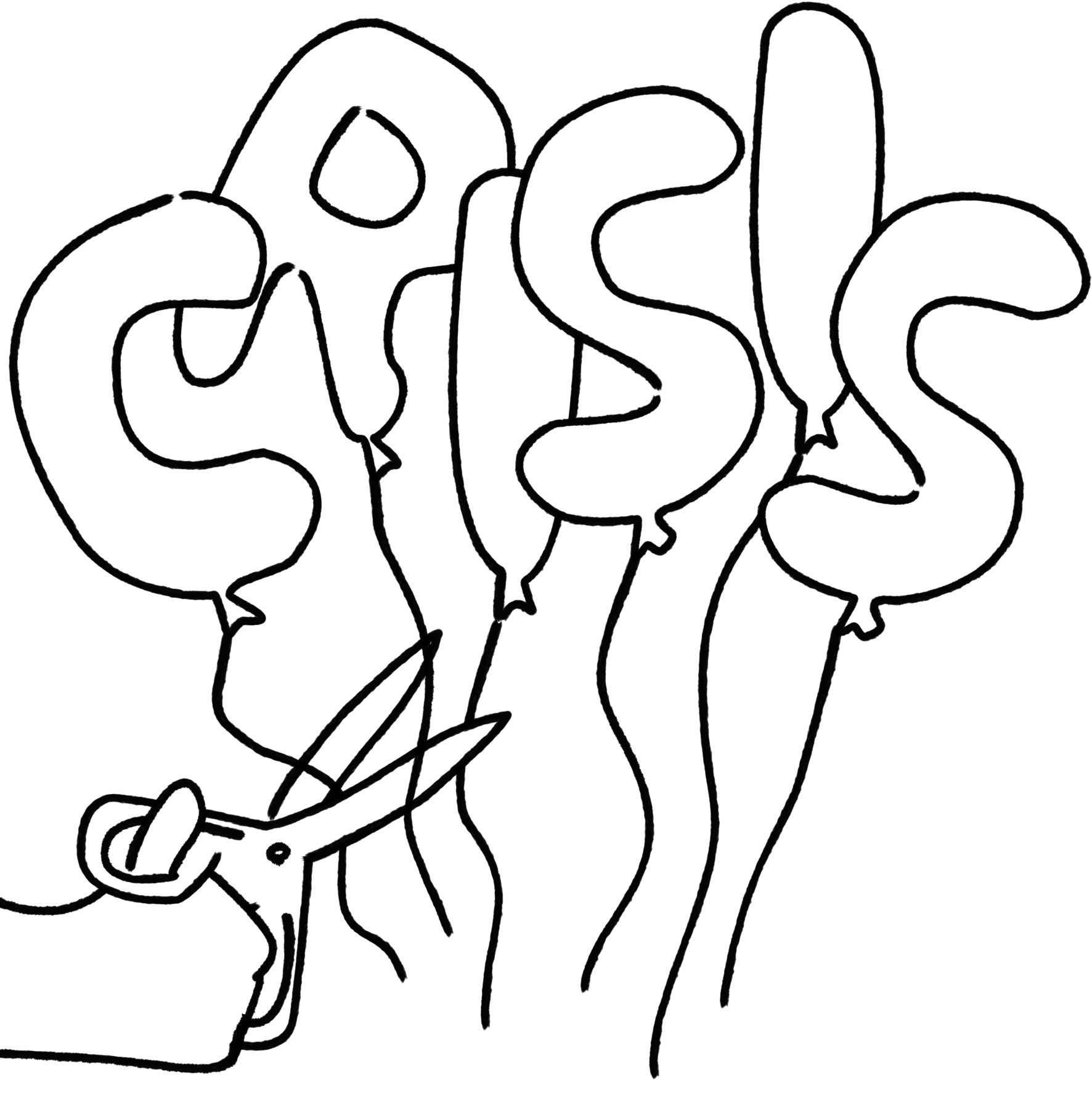
Scissors cutting the strings of CRISIS balloons

However, in times of crisis, it is crucial that such relatability does not foster proletarian union towards disruption, as this could challenge the capitalist framework within which the art is designed to function, and threaten the class privilege of the bourgeoisie for whom it generates capital.

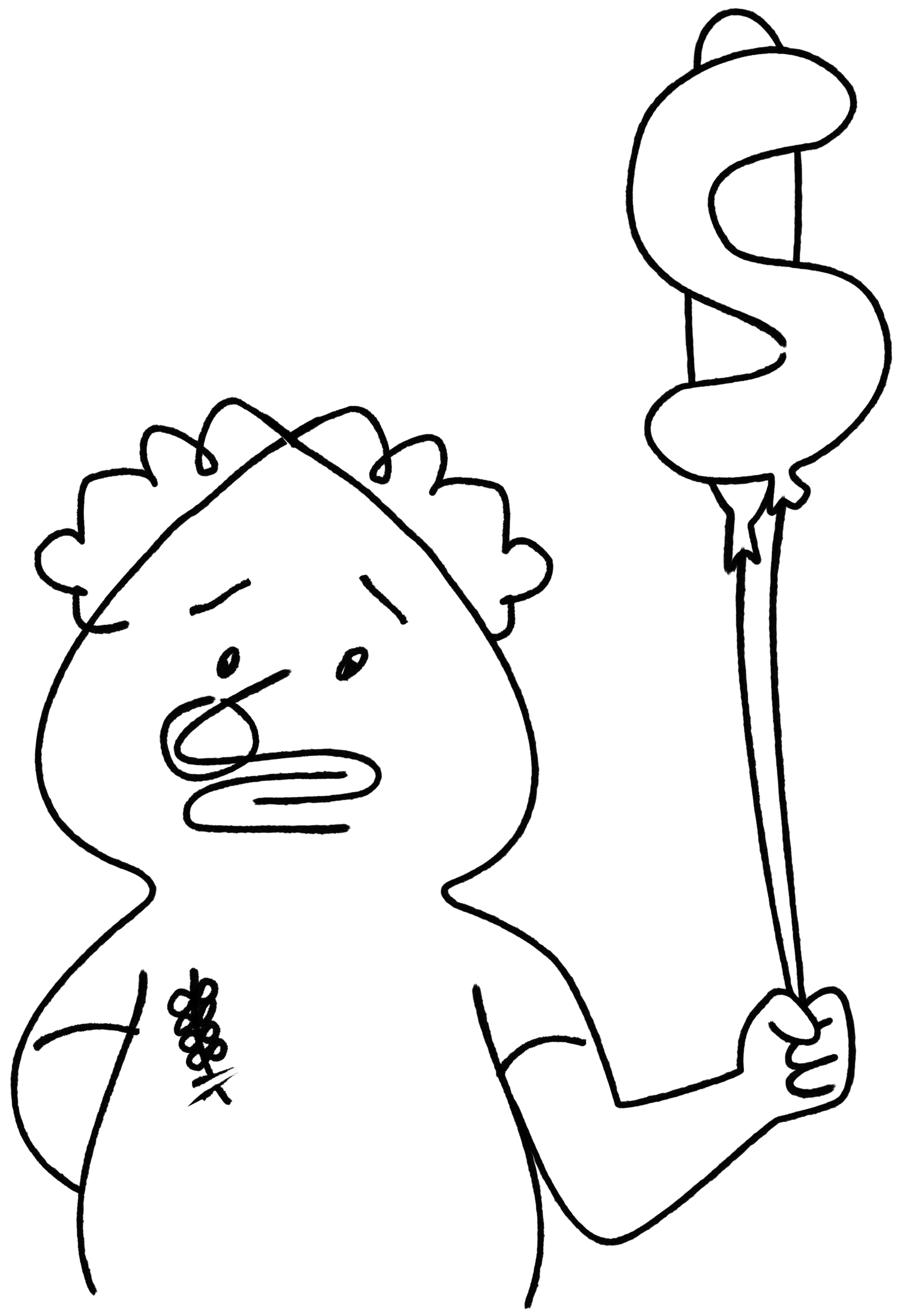
A figure holding a dollar-sign balloon

*Capital is material gain that can be interpreted through fame, status, opportunity, and all forms of wealth.

1. Art As Preservative:

In times of crisis, limiting art’s role to merely documenting and preserving the culture of those facing atrocities reveals a perspective of privilege. If art serves as a form of documentation, its intended function is to act as a reference for future generations about the atrocities it depicts. This raises critical questions about its audience, which cannot include those in crisis, as this perspective implies that art does not aim to halt the crisis but merely to observe it. Thus, the audience is those who, through class privilege, observe from a distance, expected to survive the ordeal.

The act of documenting and preserving a culture should ideally occur alongside its flourishing, not amidst its destruction.

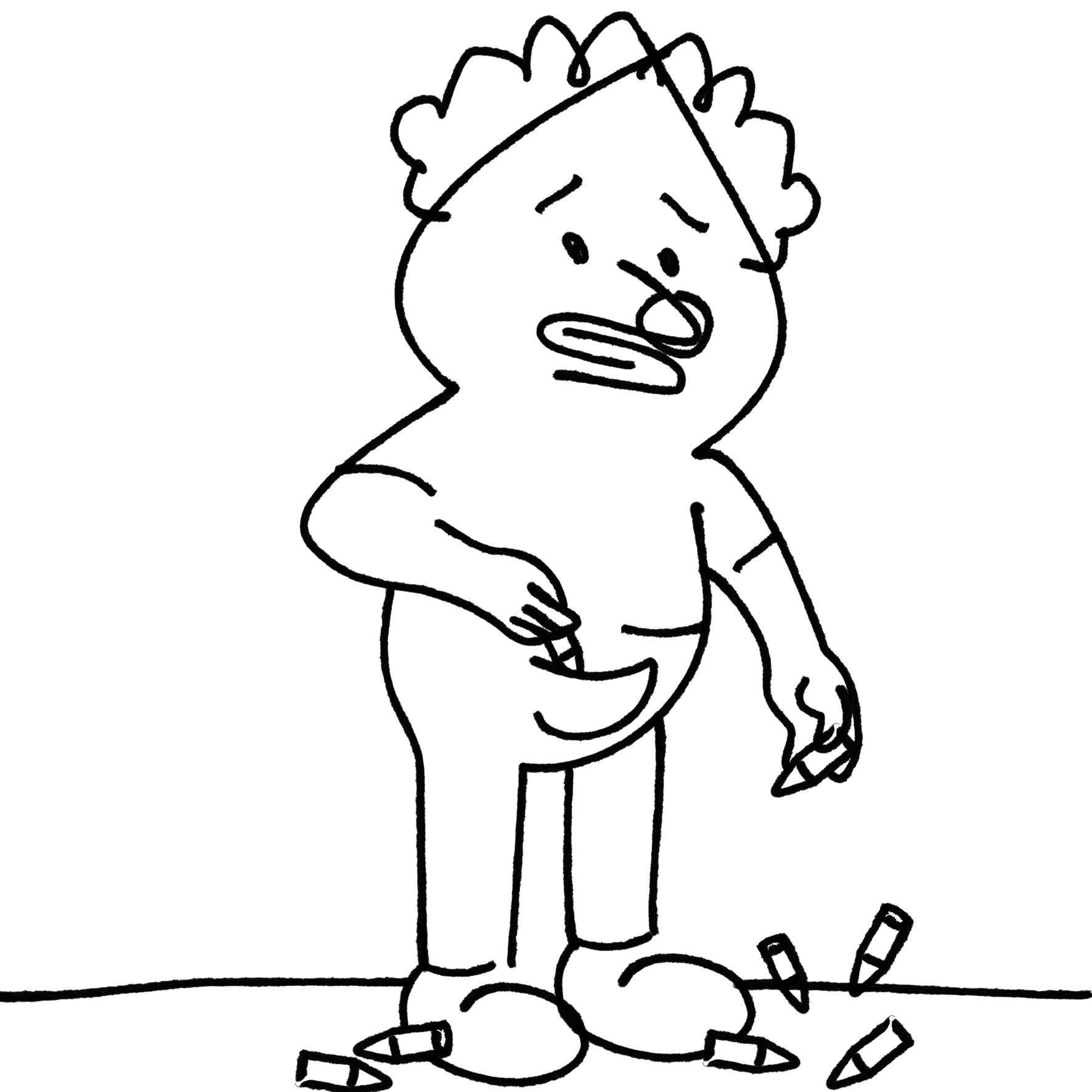
A figure standing among crayons

2. Art As Solace:

In times of crisis, framing art as a spiritual healer offers solace, yet raises questions about its audience. It becomes a pacifier, distracting from grief and anger, and lulls people into comfort, preventing engagement and dulling the impulse for change.

This perspective diminishes art’s potential and undermines its ability to inspire action and prevent atrocities. By relegating art to mere pacification, we overlook its transformative power. Art should challenge, provoke, encourage and drive societal action. It must transcend temporary comfort, aiming to stir the human spirit and inspire collective movement towards a more just society.

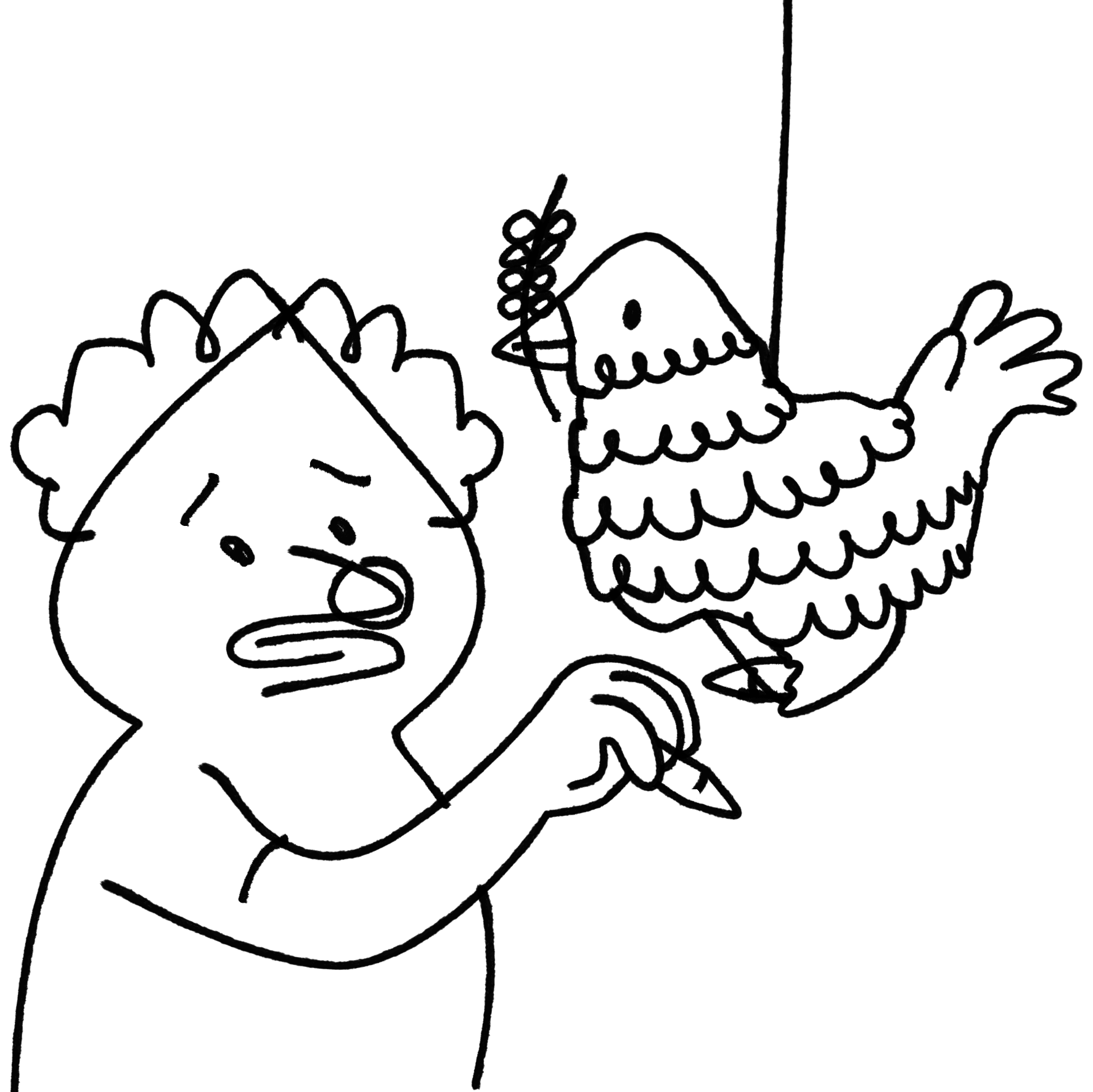
A figure painting a bird piñata

3. Art As Inspiration:

In times of crisis, art must not cater to the comfortable; it must reject the bourgeoisie and serve the affected – the workers, peasants, and soldiers. Therefore, artists must immerse themselves in the lives of the people to create art that is accessible, relevant, and mobilising, directly contributing to the material and ideological struggle.

Inspiration is the first step of mobilisation, not an indulgent state that ends once the initial engagement is over. It must ignite a continuous burn.

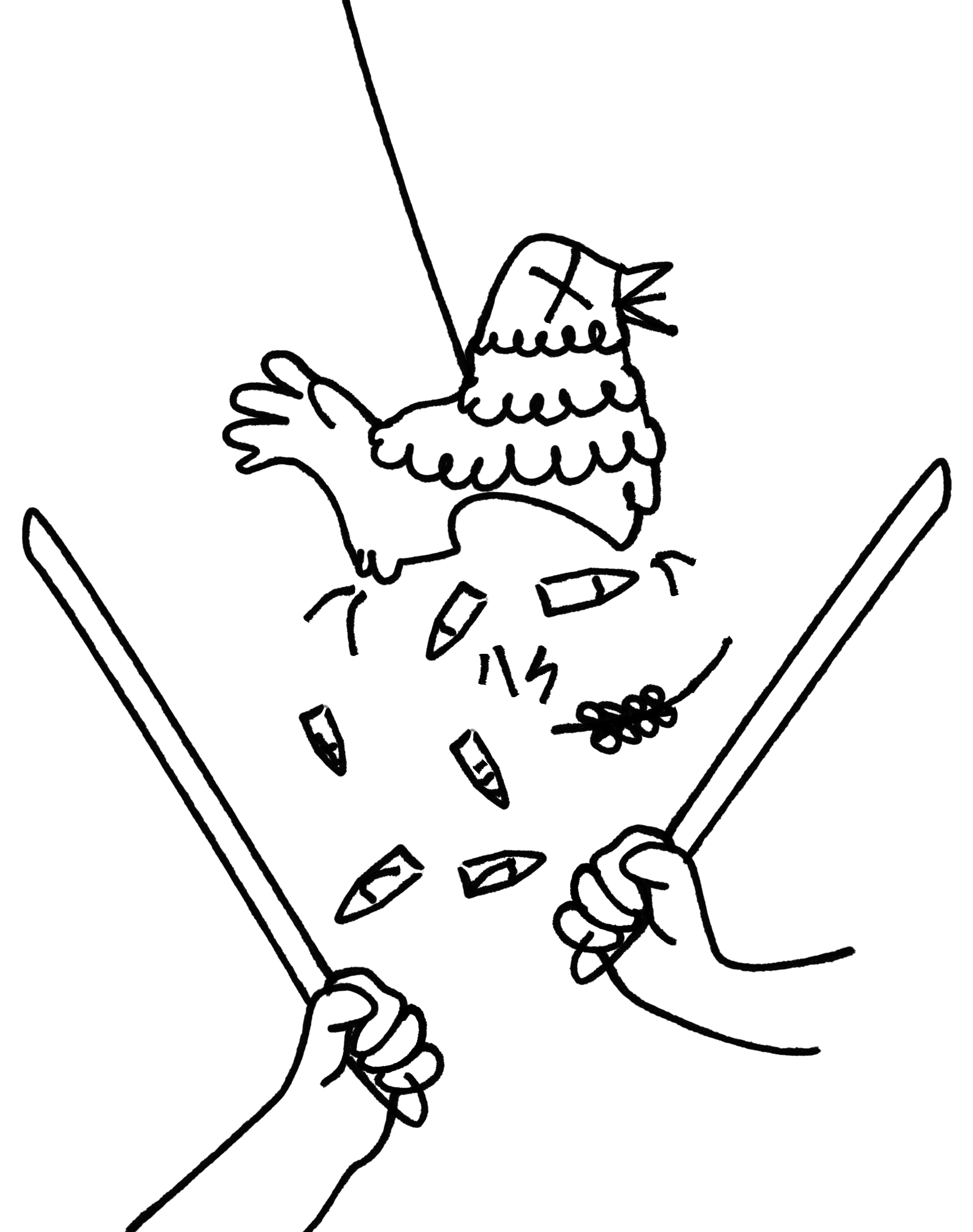
The piñata broken open by sticks

In conclusion, in a time of crisis, art must abandon any notion of passive roles and become an activated force for change. By engaging directly with the struggles of the masses and rejecting commodification, art can reclaim its transformative power, serving not just as a reflection of society but as a potent catalyst for societal and cultural change.

The Silent Ones Embroidery on white t-shirt
£20.00
Yoni Clay white incense holder
£55.00
Sold out
The New Art of Making BooksThe New Art of Making Books
Ulises Carrión
Ways of SeeingWays of Seeing
John Berger
The Poetics of SpaceThe Poetics of Space
Gaston Bachelard
LessnessLessness
Samuel Beckett
Art Education: A GlossaryArt Education: A Glossary The Death of the AuthorThe Death of the Author
Roland Barthes
A Plea for Visual ThinkingA Plea for Visual Thinking
Rudolf Arnheim
PoemsPoems
Yvonne Rainer
A Journey Through SymbolsA Journey Through Symbols Lecture on NothingLecture on Nothing
John Cage
Species of Spaces and Other PiecesSpecies of Spaces and Other Pieces
Georges Perec
A Pattern LanguageA Pattern Language
Christopher Alexander et al.
Meta Touch TownMeta Touch Town Telling is ListeningTelling is Listening Black Skin, White MasksBlack Skin, White Masks
Frantz Fanon
Decolonizing MethodologiesDecolonizing Methodologies
Linda Tuhiwai Smith
Indigeneity and Political TheoryIndigeneity and Political Theory
Karena Shaw
Decolonizing ArchivesDecolonizing Archives Decolonising MuseumsDecolonising Museums Some of Us Are BraveSome of Us Are Brave
Gloria T. Hull et al.
The Colonial PresentThe Colonial Present
Derek Gregory
More Beautiful and More TerribleMore Beautiful and More Terrible
Imani Perry
Slavery by Another NameSlavery by Another Name
Douglas A. Blackmon
How Capitalism Underdeveloped Black AmericaHow Capitalism Underdeveloped Black America
Manning Marable
Digitizing RaceDigitizing Race
Lisa Nakamura
White FragilityWhite Fragility
Robin DiAngelo
The Question of PalestineThe Question of Palestine
Edward Said
Will Postcolonialism Travel?Will Postcolonialism Travel?
Gayatri Chakravorty Spivak
Decolonizing ResistanceDecolonizing Resistance
Sharma & Wright
Israel: A Colonial-Settler State?Israel: A Colonial-Settler State?
Maxime Rodinson
Imperial Israel and the PalestiniansImperial Israel and the Palestinians
Nur Masalha
The New Crusades: Constructing the Muslim EnemyThe New Crusades: Constructing the Muslim Enemy
Qureshi & Sells
Concentration Camps on the Home FrontConcentration Camps on the Home Front
John Howard
Black Looks: Race and RepresentationBlack Looks: Race and Representation
bell hooks
Critical Race Theory: An IntroductionCritical Race Theory: An Introduction
Delgado & Stefancic
Blood in My EyeBlood in My Eye
George Jackson
Rules for RadicalsRules for Radicals
Saul D. Alinsky
The Shock DoctrineThe Shock Doctrine
Naomi Klein
The Age of Surveillance CapitalismThe Age of Surveillance Capitalism
Shoshana Zuboff
CommonismCommonism
Nico Dockx & Pascal Gielen
The Time of the TribesThe Time of the Tribes
Michel Maffesoli
Disconnection PracticesDisconnection Practices
Max Fowler & Catherine Schmidt
Women with Mustaches and Men without BeardsWomen with Mustaches and Men without Beards
Afsaneh Najmabadi
Women and the Gift EconomyWomen and the Gift Economy
Genevieve Vaughan
Queering Herbalism: MonstersQueering Herbalism: Monsters Space, Place and GenderSpace, Place and Gender
Doreen Massey
Feelings Are Facts: A LifeFeelings Are Facts: A Life
Yvonne Rainer
The Second SexThe Second Sex
Simone de Beauvoir
Ba7ithat al BadiyaBa7ithat al Badiya Men Without WomenMen Without Women
Ernest Hemingway
Sexual PersonaeSexual Personae
Camille Paglia
Persepolis 1: The Story of a ChildhoodPersepolis 1: The Story of a Childhood
Marjane Satrapi
Persepolis 2: The Story of a ReturnPersepolis 2: The Story of a Return
Marjane Satrapi
Architecture and FeminismArchitecture and Feminism
Coleman, Danze & Henderson
The Transgender Studies ReaderThe Transgender Studies Reader Heteropatriarchy and the Three Pillars of White SupremacyHeteropatriarchy and the Three Pillars of White Supremacy
Andrea Smith
Know Your Enemy: The Saudi Women’s Driving CampaignKnow Your Enemy: The Saudi Women’s Driving Campaign Invisible MonstersInvisible Monsters
Chuck Palahniuk
The Great Cosmic MotherThe Great Cosmic Mother
Monica Sjöö & Barbara Mor
Be Here NowBe Here Now
Ram Dass
Islam: An Illustrated HistoryIslam: An Illustrated History Death of the Author (essay)Death of the Author (essay)
Roland Barthes
The Conspiracy Against the Human RaceThe Conspiracy Against the Human Race
Thomas Ligotti
The Archaeology of KnowledgeThe Archaeology of Knowledge
Michel Foucault
A Flexible AnarchyA Flexible Anarchy
The Actual School
The Chomsky–Foucault DebateThe Chomsky–Foucault Debate What Is It Like to Be a Bat?What Is It Like to Be a Bat?
Thomas Nagel
Cosmic PessimismCosmic Pessimism
Eugene Thacker
Slouching Towards BethlehemSlouching Towards Bethlehem
Joan Didion
Collected FictionsCollected Fictions
Jorge Luis Borges
The UnnamableThe Unnamable
Samuel Beckett
Letters to FeliceLetters to Felice
Franz Kafka
Group zineGroup zine Colonial HangoverColonial Hangover Travel ZineTravel Zine